





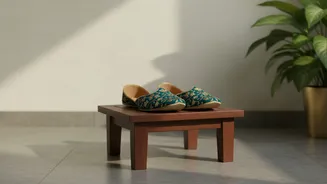


A Tradition Rooted in Humility
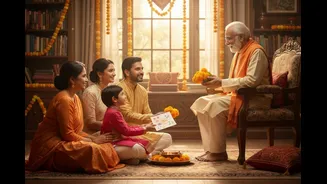
The practice of touching feet, known as Charan Sparsh, dates back to the Vedic period and is one of India's most profound gestures of reverence. It is a physical act taught from childhood, not as mere obedience, but as a way of honouring a person's age,
wisdom, and experience. By bending down, an individual symbolically sets aside their ego, acknowledging the sacrifices and selfless love of parents, the knowledge of a guru, or the life journey of an elder. This act of humility is seen as the first step toward receiving wisdom and blessings, suggesting that to learn and grow, one must first learn to bow.
The Science of Exchanging Energy
Beyond its spiritual meaning, there is a traditional belief, often framed as scientific, behind Charan Sparsh. Ancient wisdom posits that the human body is a circuit of bio-electric energy, with positive and negative currents. When a person bends and touches an elder's feet, especially by crossing their hands (right hand to right foot, left hand to left), a circuit is believed to be completed. The fingertips act as receptors, absorbing the positive energy and vibrations accumulated by the elder through a life of experience. The elder, in turn, places their hand on the head of the younger person, completing the transfer of goodwill and blessings, often referred to as 'ashirwad'. This exchange is thought to bestow strength, intellect, and prosperity.
More Than Just a Gesture
The emotional impact of this tradition is significant for both individuals. For the person touching the feet, the physical act can induce a sense of peace, grounding, and stress reduction. It reinforces a connection to their roots and family bonds. For the elder, the gesture is a non-verbal affirmation of their value and the respect they command, strengthening intergenerational ties. It serves as a powerful moment of intentional connection, where the elder offers goodwill and emotional reassurance, and the younger person receives support and affirmation. This mutual exchange fosters emotional security and reminds both parties of their shared humanity and interdependence.
Evolving Meanings in Modern India
As with many traditions, the practice of touching feet is subject to modern conversations and reinterpretations. In today's fast-paced, urban society, some question its relevance or feel it can be a compulsory ritual rather than a heartfelt gesture. There is a growing dialogue around choice and consent, moving the practice away from rigid obligation toward a more conscious expression of respect. Some families now emphasize understanding the intention behind the act, rather than enforcing it blindly. There's also a discerning view that this profound respect should be reserved for those whose character truly merits it, not just granted by age alone. Despite these shifts, the gesture endures because its core principles—humility, gratitude, and connection—remain timeless.