


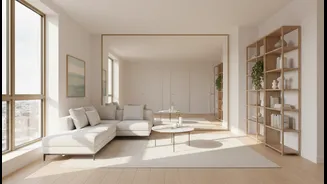
Why Vertical Lines Work Wonders
The principle behind vertical design is rooted in human perception. When our eyes encounter vertical lines, they are naturally guided on an upward journey, from floor to ceiling. This movement tricks the brain into perceiving more height than actually
exists, making a room feel loftier and more open. Unlike horizontal lines, which can make a space feel wider but also shorter, a consistent vertical theme emphasizes height, strength, and elegance, fundamentally altering the feel of a compact interior. It's a technique that architects and designers have used for centuries, from the soaring columns of cathedrals to the sleek lines of modern skyscrapers, all to inspire a sense of grandeur and space.
Paint and Wall Coverings
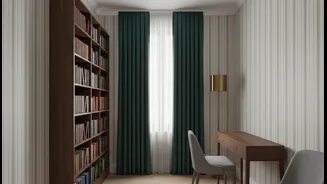
The most direct way to introduce verticality is through your walls. Painting thin vertical stripes or applying a vertically striped wallpaper is a classic method for adding visual height. You don't have to cover the entire room; even a single accent wall can be incredibly effective. For a more subtle take, consider wall panelling or thin batten boards installed vertically. This adds texture and a sophisticated rhythm to the room. The key is the direction—always guiding the eye up. Even the colour choice can help; cooler, darker tones can sometimes enhance the stretching effect, creating a calming yet spacious atmosphere.
Elevate Your Window Treatments
How you dress your windows has a massive impact on perceived room height. A common mistake is hanging a curtain rod just above the window frame. To create a vertical illusion, mount the rod as close to the ceiling as possible. This simple adjustment, combined with curtains that fall all the way to the floor, creates a long, unbroken vertical line that makes both the window and the wall appear taller. Solid-coloured drapes work well, as do fabrics with a subtle vertical pattern. The goal is to create a seamless visual line that extends the full height of the wall.
Choose Furniture with Height
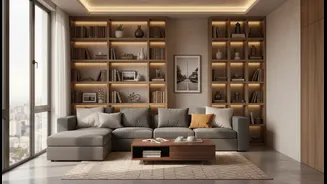
Your furniture choices are crucial. Opt for pieces that are tall and narrow rather than low and wide. Think of tall bookcases, slender étagères, or upright floor lamps. These pieces not only provide function and storage but also reinforce the vertical theme, drawing attention upward. Another clever tactic is using low-profile furniture, such as a sofa with a low back or a platform bed. The increased negative space between the top of the low furniture and the ceiling makes the walls feel significantly taller in comparison.
Accessorise for Altitude
The finishing touches can make all the difference. A tall, narrow mirror is an excellent addition to a small room; it draws the eye up while also reflecting light and making the space feel bigger and brighter. When hanging artwork, consider a vertical gallery wall, where pictures are stacked on top of one another instead of side-by-side. Even pendant lights with long cords or tall, slender plants like a snake plant or fiddle-leaf fig can contribute to the overall vertical effect, adding pops of interest that encourage an upward gaze.