






A Strategy, Not a Slump
Across Germany, the titans of the automotive world like BMW and Mercedes-Benz are deep into a period of profound transformation. The headline-grabbing staff reductions are not a response to a sudden downturn, but rather a carefully negotiated, long-term
plan to reshape their workforces for an electric and digital future. These are not mass layoffs in the traditional sense. Instead, carmakers have struck agreements with powerful works councils to manage the transition smoothly. For instance, BMW plans to reduce its German workforce by around 8,000 by the end of 2027, primarily through a voluntary redundancy program targeting administration and development roles, leaving production lines untouched. Similarly, Mercedes-Benz has a cost-reduction strategy running through 2027, using voluntary buy-outs to streamline its operations while extending job security guarantees for remaining staff until 2034. This approach highlights a strategic pivot, not a desperate measure.
The Electric and Digital Revolution
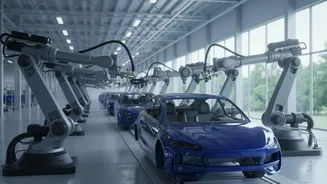
The core driver of this change is the seismic shift from internal combustion engines (ICE) to electric vehicles (EVs). An electric powertrain is mechanically far simpler than its fossil-fuel-powered predecessor, containing drastically fewer moving parts. As a result, fewer people are needed to assemble it. This fundamental truth is forcing a complete re-evaluation of the skills required in an auto factory and the company that runs it. The car of the future is defined as much by its software as its hardware, turning automakers into tech companies that also happen to make cars. This pivot means a reduced need for mechanical engineers specializing in combustion and a soaring demand for battery chemists, AI specialists, data scientists, and software developers. Companies are actively recruiting these new talents even as they offer buyouts to workers with legacy skills.
Managing the Human Transition
Given the strength of labour unions and works councils in Germany, carmakers cannot simply announce mass firings. The process is one of negotiation and social responsibility. The primary tools being used are voluntary redundancy schemes, attractive early retirement packages, and natural attrition—simply not replacing employees who leave or retire. The severance packages can be substantial, designed to be difficult to refuse. Reports on the Mercedes-Benz plan, for example, detail offers reaching hundreds of thousands of euros for long-serving employees, incentivizing them to leave voluntarily. This managed approach aims to avoid the social and economic disruption of forced redundancies and gives employees a choice. However, it's not without tension. Unions remain vigilant, ensuring that these programs remain truly voluntary and that the company upholds its commitments to the remaining workforce.
Reskilling for a New Era
Reducing staff in one area is only half the story. The other, more forward-looking half involves a massive investment in upskilling and reskilling the existing workforce. Automakers recognize that they cannot simply hire their way to a new identity; they must also bring their current employees along on the journey. Mercedes-Benz, for example, is investing billions by 2030 in its 'Turn2Learn' initiative to train employees to become data and AI specialists. The goal is to equip workers in production and administration with the digital skills necessary for the new automotive landscape. This dual strategy of 'Re-Shape' and 'Re-Skill' is crucial. It allows the company to retain valuable institutional knowledge while preparing its team for the demands of building software-defined electric vehicles, creating a pathway for employees whose current roles may become obsolete.