



A New Window on the Universe
Much of the universe is hidden from our eyes. The cosmic dust clouds that swirl through galaxies act like a thick fog, blocking visible light and concealing the places where stars and planets are born. To peer inside these cosmic nurseries, astronomers
need a different kind of vision: far-infrared light. This is the realm of PRIMA, the PRobe far-Infrared Mission for Astrophysics. Unlike the light our eyes can see, far-infrared is a form of thermal radiation emitted by extremely cold objects. Think of it as seeing the faint warmth of things that are otherwise dark and invisible. By capturing these wavelengths, PRIMA will be able to bypass the obstructive dust and witness the fundamental building blocks of the cosmos in action. This mission fills a critical observational gap, bridging the capabilities of the James Webb Space Telescope, which primarily sees in near- and mid-infrared, and ground-based radio telescopes. It's humanity’s next major step in charting the unseen.
Cosmic Origins on the To-Do List
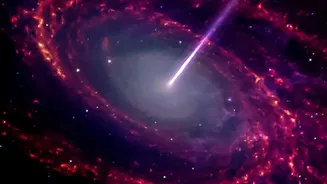
The scientific goals for PRIMA are as grand as they are fundamental. The mission is designed to tackle some of the biggest unanswered questions in astrophysics. At the top of the list is understanding how stars and their planetary systems form. PRIMA's sensitivity to far-infrared light will allow it to map the distribution of water and other key molecules within protoplanetary disks—the swirling collections of gas and dust that eventually coalesce into planets. This is something even the mighty James Webb telescope cannot do, as the specific signatures of these molecules are only visible in the far-infrared spectrum. Beyond our cosmic neighbourhood, PRIMA will gaze across billions of years to trace the co-evolution of galaxies and the supermassive black holes at their centres. By surveying vast patches of the sky, it will measure how interstellar dust and heavy elements have accumulated since the dawn of time, helping to paint a complete picture of why the universe looks the way it does today.
A Leap in Technology
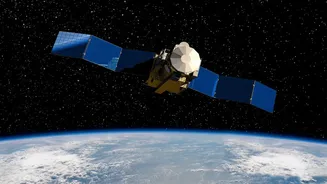
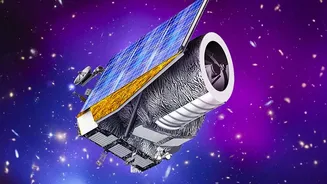
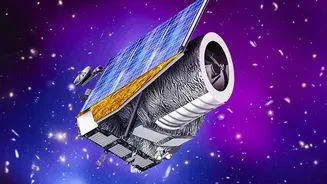
To achieve these goals, PRIMA will be an engineering marvel. The observatory is built around a 1.8-meter telescope mirror that will be cryogenically cooled to just a few degrees above absolute zero. This extreme cooling is essential to reduce the telescope's own heat, or thermal "noise," which would otherwise overwhelm the faint far-infrared signals from deep space. This will make PRIMA orders of magnitude more sensitive than its predecessors, like the Herschel and Spitzer space telescopes. The spacecraft will carry two primary instruments: FIRESS, a high-resolution spectrometer to analyze the chemical composition of distant objects, and PRIMAger, an advanced camera that can map large areas of the sky. This international project, led by NASA's Jet Propulsion Laboratory, involves collaboration with space agencies and research institutions from Germany, Canada, Japan, and several other countries.
The Final Hurdle: Confirmation Review
While the scientific community is buzzing with excitement, PRIMA is not yet a guaranteed mission. In late September 2026, NASA officially approved the mission to enter Phase B. This is a critical stage where the team refines the preliminary design, develops key technologies, and solidifies the budget and timeline. However, it is not the final green light. Before construction can begin in what is known as Phase C, the mission must pass a rigorous confirmation review. This review will scrutinize every aspect of the project—its technical feasibility, programmatic schedule, and cost performance—to ensure it's ready for implementation. If it passes this final test, the mission, with a project cost capped at approximately $1.2 billion, will target a 2033 launch for a five-year survey of the cosmos. For now, scientists are hard at work proving that their revolutionary vision for seeing the universe is ready to become a reality.