

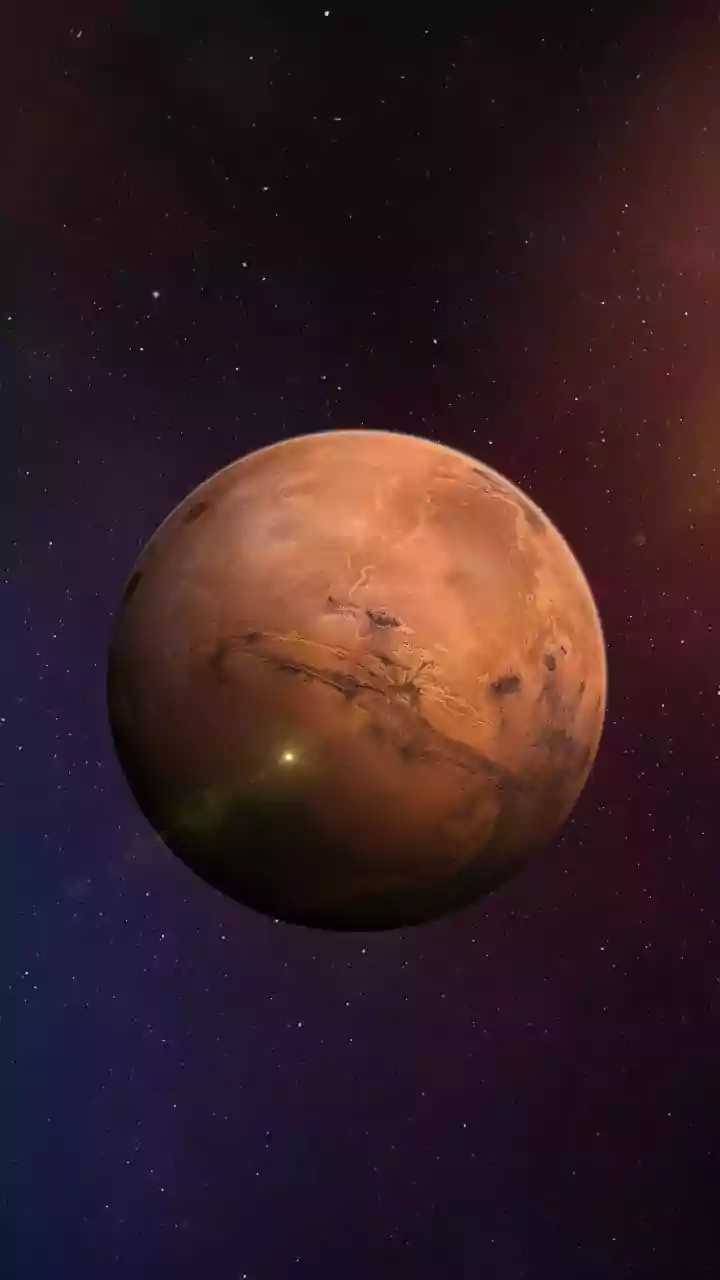


Imagine holding a piece of another world in your hands. A rock that journeyed millions of kilometres through space after being blasted from Mars, eventually landing in Earth's Sahara Desert, carrying with it secrets from over 4 billion years ago.
A 'Black Beauty' in the Desert
In 2011,
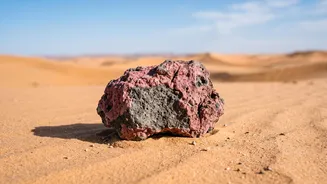
a unique, dark, and glossy rock was discovered in the Sahara Desert. Weighing about 320 grams (11 ounces), it was given the official name Northwest Africa (NWA) 7034, but its striking appearance earned it the nickname 'Black Beauty'. Scientists quickly realised this was no ordinary meteorite. Its chemical signature confirmed it was from Mars, but it was unlike any of the approximately 110 other known Martian meteorites, which mostly fall into a group known as SNCs (Shergotty, Nakhla, and Chassigny). Black Beauty was so different it established a new category of Martian meteorite all on its own.
A Jigsaw Puzzle of Martian History
What makes Black Beauty so special is that it’s a 'breccia', a type of rock made of many different rock fragments cemented together. While other Martian meteorites are typically a single type of volcanic rock, NWA 7034 is a complex mosaic, containing bits of ancient Martian crust, volcanic material, and even sedimentary rocks. This makes it a priceless sample of the Martian surface, almost like a geological scrapbook. Its composition is a much better match for the Martian crust observed by NASA's rovers and orbiters than any other meteorite found to date, giving scientists their first physical sample of the 'average' Martian surface.
A Window into a Watery Past
The age of the meteorite is a source of great excitement. While studies show the rock itself came together around 2.1 billion years ago, it contains much older fragments. Some mineral components, like zircon crystals, have been dated to be over 4.4 billion years old. This means the rock contains material from the very first moments of Mars' existence. Furthermore, Black Beauty contains about ten times more water than other Martian meteorites. This water isn't liquid but is locked within the rock's minerals, suggesting the materials that formed it interacted with liquid water on Mars long ago. This discovery provides strong evidence that ancient Mars was a much wetter planet, a crucial ingredient for the potential development of life.
Tracing the Journey Home
So how did this piece of Mars get here? Scientists believe a powerful asteroid impact blasted it off the planet's surface between 5 and 10 million years ago. Using supercomputers and detailed images of Mars' surface, researchers have even traced its likely origin to a specific crater, which they named Karratha, in the planet's southern highlands. It appears the rock was first excavated by an even earlier impact 1.5 billion years ago before the Karratha impact finally sent it on its cosmic journey to Earth. This incredible detective work provides geological context for the sample, helping scientists understand the region of Mars it came from—a region that may hold clues to the planet's earliest environment, a history that has been lost on Earth due to plate tectonics and erosion.