



An Avalanche of Questions
In the wake of a deadly flash flood that tore through the Bhote Koshi river valley in Nepal, initial confusion has given way to a focused scientific investigation. Early speculation considered a glacial lake outburst flood (GLOF), a known hazard in the region.
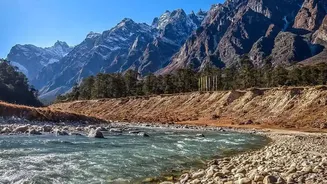
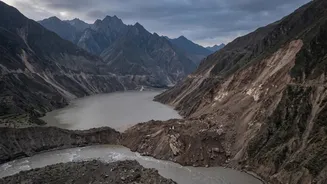
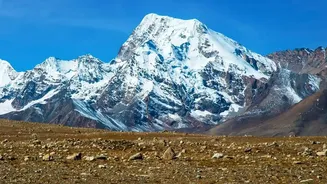
However, a different and more complex theory is now taking center stage: that a colossal avalanche of ice and rock plunged from a glacier, temporarily blocking the Lhende River, a tributary of the Bhote Koshi. Using satellite imagery and seismic data, researchers are analyzing a cascade of events that began high on a mountain peak near the Nepal-Tibet border. The leading hypothesis suggests this natural dam failed, releasing a sudden, powerful surge of impounded water and debris downstream.
The Science of a Cascading Hazard
What scientists are studying is a multi-stage phenomenon known as a cascading hazard. It began when a massive section of a glacier, along with the bedrock beneath it, broke away at a high altitude. The fall was so powerful it registered as a magnitude 5.2 seismic event, initially mistaken for an earthquake. This ice and rock avalanche, estimated to be the volume of dozens of Great Pyramids, slammed into the narrow valley below. The debris then likely formed a temporary dam across the Lhende River. Such dams, made of loose, unconsolidated material, are inherently unstable. As water from the river backed up behind the blockage, the pressure mounted until the dam was breached, leading to the catastrophic and fast-moving flood.
Clues from Above and On the Ground
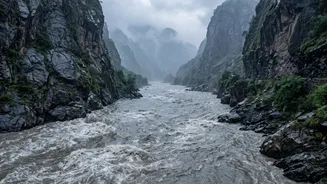
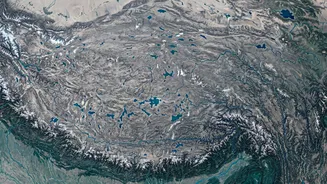
Investigators from institutions like the International Centre for Integrated Mountain Development (ICIMOD) are using a combination of tools to confirm this sequence. Satellite images from before and after the event show a significant portion of a glacier missing and the valley floor below strewn with new debris. The river itself appears swollen and murky in the aftermath, evidence of the massive sediment load it carried. Researchers are also analyzing river level data, which showed an extraordinary rise in a very short time — at one point, the Trishuli River downstream rose by as much as nine metres in just 30 minutes, a speed that points away from rainfall-induced flooding and towards a sudden dam breach.
A Sign of an Unstable Future
While it is too early to link this specific event directly to climate change, it fits a deeply concerning pattern. The Himalayas are warming significantly faster than the global average, leading to accelerated glacier melt and thawing permafrost. This makes the very ground beneath glaciers less stable and increases the likelihood of collapses. A 2026 study in the journal Science already highlighted that Himalayan rivers are becoming more unstable and shifting course more rapidly due to these climatic shifts. Events like the one on the Lhende River are a stark illustration of how these changes can create unpredictable and devastating hazards for the millions of people living in downstream communities and for the critical infrastructure, such as hydropower plants, located in these river corridors.