







The Science Behind the Soothe
Tension headaches are the most common type of headache, often triggered by muscle contractions in the head and neck. This is where peppermint comes in. Peppermint's active ingredient, menthol, is well-researched for its analgesic, or pain-relieving, properties.
When applied topically, menthol creates a cooling sensation that can distract from pain and may help relax muscles. Studies have shown that topical menthol can be effective for tension headaches, with some research suggesting its efficacy is comparable to common over-the-counter painkillers. The idea of a peppermint tea compress combines the benefits of menthol with the therapeutic effects of temperature.
The Case for a Cool Compress
A cool compress is often the go-to for migraine sufferers, but it can also help with tension headaches. The primary mechanism is vasoconstriction — the narrowing of blood vessels. Some headaches are associated with vasodilation (widening of blood vessels), so applying cold can help counteract this, reducing blood flow and inflammation. The cold also has a numbing effect, which can dull the sensation of pain. Applying a cool peppermint tea compress to your forehead or temples combines this numbing, vessel-constricting effect with the cooling sensation of menthol, offering a dual-action approach to relief. For best results, apply for about 15 minutes at a time.
When to Use a Warm Compress
If your headache feels like it stems from tight, knotted muscles in your neck and shoulders, a warm compress may be the better choice. Heat therapy promotes vasodilation, which increases blood flow to the area. This enhanced circulation can help relax tense muscles, which are a primary cause of tension headaches. Applying a warm compress to the back of your neck or shoulders can help release the tightness that may be referring pain to your head. Using warm peppermint tea adds a layer of muscle-relaxing aromatherapy to the experience, potentially enhancing the soothing effect on tired, strained muscles.
How to Make Your Compress
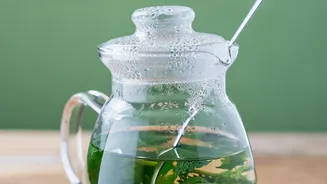
Making a peppermint tea compress is simple. First, brew a strong cup of peppermint tea using two or three tea bags and let it steep for at least 10 minutes to ensure a high concentration of its essential oils. For a cool compress, place the brewed tea in the refrigerator or freezer until it is thoroughly chilled. Soak a clean washcloth in the cold tea, wring it out so it's damp but not dripping, and apply it to your forehead, temples, or the back of your neck. For a warm compress, use the tea while it is still very warm (but not scalding). Soak the cloth, wring it out, and apply it to the base of your neck or your shoulders. You can refresh the compress as it loses its temperature.
What a Compress Cannot Do
While a peppermint tea compress can be a wonderful tool for temporary relief, it is not a cure. It addresses the symptoms, not the underlying cause of your headaches. If your tension headaches are triggered by chronic stress, poor posture, dehydration, or lack of sleep, a compress will not solve those root issues. It is a management tool for mild to moderate pain, not a treatment for severe or chronic headache conditions. It cannot replace medical diagnosis or treatment for more serious issues that may be causing headaches, like a brain injury or infection.
When to See a Doctor
Home remedies have their limits. It is important to consult a healthcare provider if your headaches become more frequent or severe, or if they don't respond to over-the-counter or home treatments. You should seek urgent medical care if you experience 'the worst headache of your life', a sudden and severe headache, or one accompanied by fever, a stiff neck, confusion, weakness, or vision changes. If you find yourself needing headache medication more than twice a week, it is a good idea to make an appointment with your doctor to discuss a long-term management plan.