





The Monsoon's Cleansing Effect
Throughout July and September, the monsoon provides a natural reprieve from air pollution. Heavy rains act as a giant scrubber, washing dust, particulate matter, and other pollutants out of the atmosphere. Accompanied by stronger winds, the rainy season
effectively cleanses the air, leading to the 'good' and 'satisfactory' Air Quality Index (AQI) days that residents cherish. However, this relief is temporary. Once the rains withdraw, the atmospheric dynamics begin to shift dramatically, setting the stage for the annual pollution emergency.
The Shift in Winds
The end of the monsoon marks a crucial change in wind patterns over northern India. Wind speeds drop significantly, reducing the atmosphere's ability to disperse pollutants. More importantly, the wind direction often changes, beginning to flow from the northwest. This shift is critical because it turns the skies into a delivery system for pollution from Punjab and Haryana, where the post-harvest season is just beginning.
The Arrival of Stubble Smoke
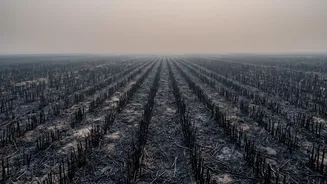
In the weeks following the paddy harvest in late October and November, farmers in Punjab and Haryana have a narrow window to clear their fields to plant the next crop, wheat. The quickest and cheapest method is to burn the leftover crop residue, an activity known as stubble or 'parali' burning. This practice releases enormous volumes of smoke containing fine particulate matter (PM2.5) and other toxins. The prevailing northwesterly winds carry this smoke directly across the Indo-Gangetic plain, blanketing Delhi-NCR. Studies have shown that during peak burning season, stubble smoke can account for over 30% of Delhi's particulate pollution.
The Science of the Trap: Temperature Inversion
This is where meteorology creates a perfect storm. During post-monsoon and winter nights, the ground cools rapidly, making the air near the surface colder than the air layer above it. This phenomenon is called a temperature inversion. Normally, warmer air near the surface rises, carrying pollutants with it and allowing them to disperse. But an inversion layer acts like an invisible lid, trapping the cold, dense air—and everything in it—close to the ground. The 'mixing height', or the vertical space available for pollutants to disperse, shrinks dramatically, sometimes to just a few hundred metres. This atmospheric 'lid' prevents pollution from both stubble burning and local sources from escaping.
Local Pollutants with Nowhere to Go
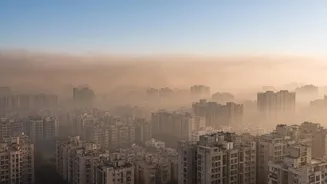
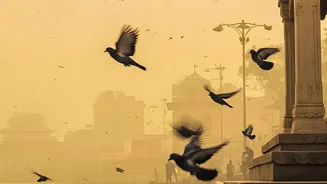
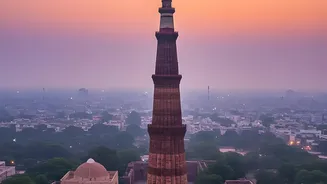
While stubble burning is a major seasonal contributor, Delhi-NCR's baseline pollution is already high due to a combination of factors. Emissions from millions of vehicles, industrial activities, construction dust, and open waste burning constantly pump pollutants into the air. During the post-monsoon period, these local emissions get caught under the same inversion lid as the stubble smoke. The combination is devastating, causing the AQI to spike into 'Severe' and 'Hazardous' categories for days or weeks on end, creating the thick, brown smog the region has become infamous for.
The Response: GRAP and Other Measures
To combat this predictable crisis, authorities rely on the Graded Response Action Plan (GRAP), an emergency framework implemented by the Commission for Air Quality Management (CAQM). Based on AQI levels and forecasts, GRAP mandates progressively stricter measures, from banning certain vehicles and construction activities to restricting the use of diesel generators. For 2026, the CAQM has revised GRAP to be more proactive, initiating some restrictions at an earlier stage. Additionally, authorities are focusing on year-round control of industrial emissions and vehicular pollution to lower the baseline before the seasonal crisis hits.