




Why Ragi is a Breakfast Champion
For generations, ragi, or finger millet, has been a staple in Indian households, and for good reason. This humble grain is a nutritional powerhouse, celebrated for its high content of calcium, iron, and dietary fibre. Unlike refined flours that can lead
to energy crashes, ragi has a low glycemic index, which helps in managing blood sugar levels and provides sustained energy. Its naturally earthy and nutty flavour provides a robust base for pancakes, meaning you don't need to overcompensate with heaps of sugar to make them palatable. By choosing ragi, you're not just making a pancake; you're choosing better bone health, improved digestion, and a breakfast that keeps you feeling full and energized for hours.
Unlocking Natural Sweetness
The key to a delicious sugar-free pancake lies in understanding natural alternatives. Mashed ripe bananas are a popular choice, providing not just sweetness but also moisture, which results in a softer pancake. Similarly, date paste or finely chopped dates offer a rich, caramel-like sweetness and added nutrients. You can also turn to unsweetened applesauce, which works wonderfully to keep the pancakes moist and tender. For a more traditional Indian touch, a small amount of jaggery (gur) can be used, which brings a complex, molasses-like flavour. These alternatives don't just replace sugar; they enhance the pancake with their own unique flavours and nutritional benefits.
Beyond Sweet: Building a Symphony of Flavour
A truly tasty pancake is about more than just sweetness. Spices are your best friend when it comes to creating depth of flavour. A pinch of cinnamon, cardamom (elaichi), or nutmeg can transform the batter, adding warmth and aroma that complements the nutty ragi perfectly. A dash of vanilla extract can also round out the flavours beautifully. For textural contrast, consider adding chopped nuts like walnuts or almonds, or seeds such as chia or flaxseed directly into the batter. These additions not only provide a satisfying crunch but also boost the protein and healthy fat content of your breakfast.
A Blueprint for Perfect Ragi Pancakes
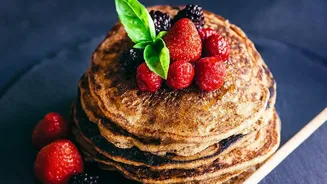
Creating your own perfect ragi pancakes is simple. Start by whisking your dry ingredients: one cup of ragi flour, a teaspoon of baking powder, and a pinch of salt. For a lighter, fluffier texture, you can mix ragi flour with whole wheat or oat flour. In a separate bowl, combine your wet ingredients. Mash one very ripe banana until smooth, then whisk in one egg (or a flax egg for a vegan option) and about three-quarters of a cup of milk or plant-based milk. Gently fold the wet ingredients into the dry, mixing only until just combined to avoid a dense pancake. Let the batter rest for 10-15 minutes; this allows the flour to hydrate and results in a fluffier pancake. Cook ladlefuls of the batter on a lightly greased, medium-hot pan for 2-3 minutes per side, until bubbles form and the edges are set.
The Art of Toppings
Since the pancakes themselves are not overly sweet, the toppings are where you can add a final flourish of flavour and sweetness. A cascade of fresh berries, sliced bananas, or other seasonal fruits adds natural sweetness and a dose of vitamins. For a creamy contrast, add a dollop of plain or Greek yoghurt. If you desire a bit more sweetness, a light drizzle of honey or pure maple syrup works well. For a final touch of texture, sprinkle on some toasted nuts, seeds, or a bit of unsweetened toasted coconut. These toppings complete the dish, making it a feast for the eyes as well as the palate.