






A Walk on the Wild Side of Flavour
For years, the gold standard in conscientious dining has been 'farm-to-table'. But a new, more adventurous movement is taking root: 'forest-to-table'. Instead of cultivated fields, innovative chefs are exploring woodlands, hillsides, and untamed landscapes
to source ingredients that offer a true taste of place. This includes wild herbs, exotic mushrooms, unique berries, and even parts of trees like spruce tips and pine needles. The philosophy is simple: process ingredients as naturally as possible to capture their intense, original flavours. This approach taps into a desire for sustainability, health, and a deeper connection with nature, moving beyond what is merely grown to what grows wild.
The Foraging Philosophy in India
In India, foraging isn't a novelty; it's an ancient practice woven into the fabric of many indigenous and tribal communities. Visionary chefs are now looking to these traditions for inspiration. Chef Vanika Choudhary of Mumbai's Noon, for instance, highlights and preserves precious, foraged ingredients that rarely appear on mainstream menus, like tamyung from Ladakh and fiddlehead ferns. Similarly, Chef Prateek Sadhu's restaurant NAAR in Himachal Pradesh is a tribute to his Kashmiri roots, with a menu built around ingredients that are grown, foraged, or sourced from local producers in the Himalayan region. This isn't just about finding new flavours; it's about reconnecting with food at its most primal level and celebrating India's immense biodiversity.
What's on the Wild Menu?
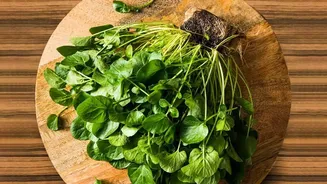
The forest pantry is diverse and full of complex flavours. In India, chefs are experimenting with a treasure trove of wild produce. Chef Thomas Zacharias has used umber (cluster fig) from Maharashtra in a papdi chaat, while Chef Radhika Khandelwal has worked with takla, a wild green that appears during the monsoon. Other discoveries include the golden berry hisalu from Uttarakhand and ingredients like stinky beans and Timur pepper from Nagaland. Globally, chefs are using pine needles to infuse oils and creams with citrusy notes, turning wild mushrooms into rich sauces, and using edible flowers and ferns as delicate garnishes. These ingredients bring nuanced, complex, and often entirely new flavours that cannot be replicated by cultivated varieties.
More Than Just a Trend
The shift towards forest ingredients represents a deeper change in culinary thinking. It's a move away from standardised, globally available produce towards food that is hyper-local and seasonal. This philosophy is championed by chefs like Gayatri Desai of Ground Up in Pune, who focuses on preserving the food traditions of foragers through techniques like fermentation. By using wild ingredients, chefs can tell a compelling story about their connection to the local landscape. It provides diners with more than just a meal; it offers an experience that is tied to a specific environment, reflecting the quiet and distinct personality of the forest itself.
Challenges and Rewards
Embracing forest cuisine is not without its difficulties. The availability of wild ingredients is unpredictable and entirely dependent on the season and weather. Furthermore, foraging requires expert knowledge to distinguish edible plants from toxic ones, a risk that restaurants must manage carefully. However, the rewards are immense. For diners, it means experiencing unique flavours that are a direct expression of the terroir. For chefs, it's an opportunity to innovate and build a powerful narrative around sustainability and authenticity. This movement is about preserving knowledge, supporting biodiversity, and ultimately, making dining a more meaningful and delicious adventure.