







Putting the Numbers in Context
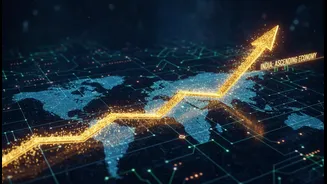
When headlines mention growth of nearly seven per cent, it’s not just an abstract number. Various global agencies have affirmed this trend for 2026. The International Monetary Fund (IMF), for instance, projects India's growth for the calendar year at 7.0%,
while forecasting 6.4% for the FY26-27 fiscal year. Similarly, Goldman Sachs has revised its calendar year 2026 forecast up to 6.8%, and Bank of America sees it touching 7 per cent. These figures are significant because they come at a time when global growth is expected to slow to around 3.0%, hampered by geopolitical tensions and other headwinds. This wide gap is what places India’s performance in a different league compared to its global peers.
The Engines of Expansion
The foundation of this growth is increasingly built on domestic strength. Strong private consumption and resilient services activity are consistently cited as key drivers by institutions like the IMF. This means that Indian households and businesses are creating a powerful internal economic engine. The services sector, which now contributes to 60% of Gross Value Added (GVA), has been a star performer, surging 9.2% in the second quarter of the previous fiscal year. This has been complemented by a robust push in government capital expenditure, which has boosted investment and supported the manufacturing sector. Aided by policy measures, low inflation in 2025, and tax relief, this domestic demand has provided a crucial buffer against external shocks.
How India Compares Globally
India's growth story becomes even more striking when placed alongside other major economies. While India is projected to grow between 6.4% and 7.0%, other large economies are expanding at a much slower pace. Projections for China's growth in 2026 are around 4.4-4.8%, while the US is expected to grow at about 2.6%. The Euro area and Japan are forecast to see even more modest expansions, at 1.3% and 0.6% respectively. This divergence makes India a clear outlier. Moody's Analytics noted that India will remain the fastest-growing major economy in 2026 and 2027, even if it loses a little pace in line with a softer global trend. This sustained high-growth differential is reshaping the global economic order and drawing significant attention from international investors.
Navigating Headwinds and Risks
Despite the optimism, the path ahead is not without challenges. The Indian economy is not immune to global disruptions. Geopolitical conflicts, particularly in the Middle East, pose a significant risk due to India's heavy reliance on oil imports. A sharp or sustained rise in crude oil prices could fuel inflation and widen the current account deficit. The Reserve Bank of India has cited these energy price risks, along with weather-related uncertainties impacting agriculture, as key factors to watch. Furthermore, ensuring that this high-level growth translates into sufficient job creation for a young and growing population remains a critical long-term challenge that policymakers must continue to address.