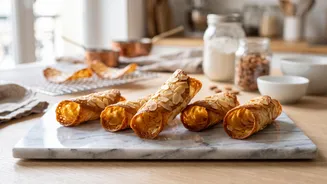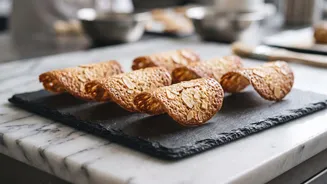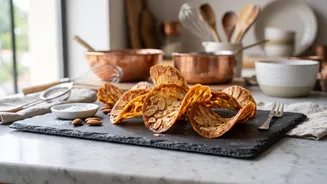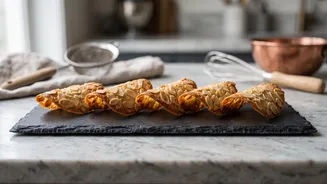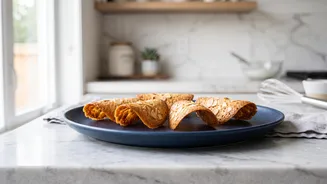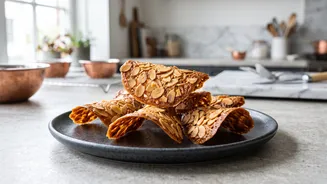


There is a special magic to a perfect French almond tuile. Wafer-thin, elegantly curved, and with a satisfying snap, these delicate cookies are a testament to baking precision. But their signature crispiness is incredibly fragile.
What Are French Almond Tuiles?
French for 'tile', tuiles
are named for their resemblance to the curved terracotta tiles that adorn rooftops in Provence. These are not your average chunky, chewy cookies. Tuiles are exceptionally thin, delicate, and defined by their crisp, light texture. Traditionally made from a simple batter of egg whites, sugar, flour, melted butter, and a generous amount of sliced almonds, they are baked until golden and shaped while still hot. Immediately after leaving the oven, the pliable cookies are draped over a rolling pin or a similar cylindrical object to give them their signature arch as they cool and harden. They are often served alongside coffee, tea, or as a sophisticated garnish for desserts like ice cream and mousse.
The Science of the Snap
The secret to a tuile's characteristic crispiness lies in its composition and the baking process. The batter has a high ratio of sugar and fat to flour, with just enough liquid to be spread thinly. During baking, two crucial things happen: the sugar caramelizes, contributing to the flavour and rigid structure, and most of the moisture from the batter evaporates. This low moisture content is what makes the final, cooled cookie so brittle and snappy. When hot, the fats are still liquid and the sugars are in a dissolved state, which is why the cookie is flexible enough to be shaped. As it cools, the fats solidify and the sugar recrystallizes, locking the tuile into its crisp, final form.
Humidity: The Enemy of Crispness
The very thing that makes a tuile perfect is also its greatest weakness. The ingredients that create that delightful snap—namely sugar and flour—are hygroscopic. This is a scientific term meaning they naturally attract and absorb water molecules from the surrounding air. On a humid day, or if left exposed to the air, a perfectly crisp tuile will begin to draw in moisture from the atmosphere. This process, known as sogginess, causes the rigid, crystalline structure of the cookie to soften, turning that satisfying snap into a disappointing bend. Even a few hours of exposure can be enough to ruin the texture you worked so hard to achieve.
Why Airtight Storage Is Non-Negotiable
This is where the humble storage container becomes just as important as the oven. An airtight container creates a physical barrier, isolating the tuiles from the ambient humidity in your kitchen. By sealing them off, you prevent the hygroscopic ingredients from pulling moisture from the air, thereby preserving their delicate, brittle structure. A standard cookie jar with a loose lid or a simple plastic bag will not suffice; they allow too much air exchange. For a cookie as sensitive as a tuile, 'airtight' is not a suggestion—it is a requirement to maintain its peak texture. You must wait until the tuiles are completely cool before storing them; trapping any residual heat and steam will create moisture inside the container and make them soft.
Choosing Your Storage Weapon
When selecting a container, look for features that guarantee a true seal. Glass or BPA free plastic containers with locking lids and silicone gaskets are excellent choices. Brands like OXO and Lock & Lock are often praised for their secure seals. A glass jar with a clamp down lid and a rubber ring also works very well. When packing the tuiles, you can nest them carefully, separated by layers of parchment or wax paper to prevent breakage. They are best enjoyed within a few days, as their peak freshness is fleeting. For those living in particularly humid climates, you can go a step further by adding a food safe silica gel packet to the container to absorb any trapped moisture, a trick many professional kitchens use.