




The Generalist's Mandate
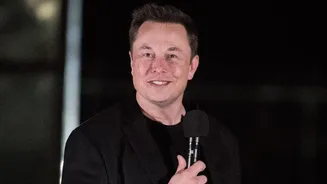
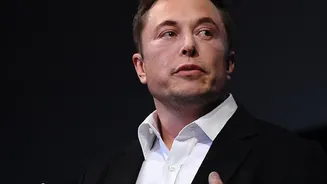
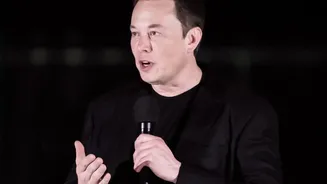
In a series of public discussions in late September and early October 2026, including an interview with China Media Group, Elon Musk laid out a vision for the future of work that challenges conventional wisdom. As artificial intelligence and humanoid
robots become increasingly capable of performing complex, specialised tasks—from writing code to manufacturing goods—Musk believes the most valuable human skill will shift. The future, he argues, will belong not to the person who can perform a specific function, but to the person who knows what needs to be done in the first place. He recommends a broad-based education that covers the arts, sciences, and engineering. This isn't about collecting trivia; it's about building a wide-ranging mental framework to identify problems and formulate the right questions for AI to solve. In Musk's view, as machines handle the 'how,' the ultimate human advantage will be in defining the 'what' and 'why'.
Why Specialists Might Hit a Ceiling
For decades, career coaches have championed specialisation. The logic was simple: becoming an expert in a niche field created job security. Musk’s argument is that AI fundamentally upends this model. Artificial intelligence is, in essence, the ultimate specialist. It can absorb vast datasets, identify patterns, and execute defined tasks with a speed and accuracy no human can match. Jobs that involve repetitive, though highly skilled, functions are the most susceptible to this shift. The person who only understands one discipline may find their expertise automated away. However, the person who understands how technology, human behaviour, economics, and art intersect can provide something AI cannot: context. They can ask whether a technically impressive AI system is actually needed, or whether a robot's proposed solution makes financial sense and aligns with human values. This ability to connect disparate fields is what will empower people to direct AI, rather than be replaced by it.
A Career Modelled on Musk Himself
Musk’s advice is a direct reflection of his own career. He is often described not as a specialist, but as an 'expert generalist'—someone who possesses deep, functional knowledge across multiple, seemingly unrelated domains. He has famously integrated physics, engineering, software, manufacturing, and business strategy to build disruptive companies like SpaceX and Tesla. An investor who worked with Musk on SpaceX was reportedly astonished at his deep knowledge of rocket engineering, despite his background being primarily in business and physics. This hybrid approach allows him to see the big picture and dive into the technical details, correcting experts in their own fields. By learning the fundamental principles of different industries, he can identify novel connections and opportunities that specialists, focused on their own silo, might miss. His career is the primary case study for his philosophy: broad knowledge is a powerful tool for innovation.
How to Cultivate Broad Knowledge
Adopting a 'broad learning' mindset doesn't mean abandoning your primary skills. Instead, it means actively layering other disciplines on top of them. If you're a software developer, read about history or psychology. If you're a marketer, take an online course in basic engineering principles. The goal is to build what Musk calls 'wide general knowledge'. Start by reading books outside your field. Explore documentaries on science, art, and philosophy. Engage with people from different industries and ask them about the fundamental problems they are trying to solve. The concept is closely related to 'prompt engineering'—the skill of crafting effective instructions for an AI. To tell a robot to 'build a castle,' as Musk puts it, you need some understanding of architecture, materials, and design to articulate what you truly want. This cross-disciplinary knowledge is what will allow you to formulate better questions and, ultimately, get better results from the powerful tools at your disposal.