



A Crash and an Accidental Experiment
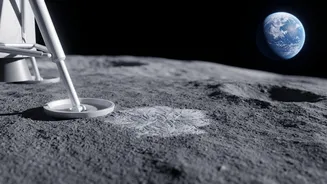
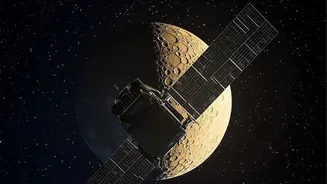
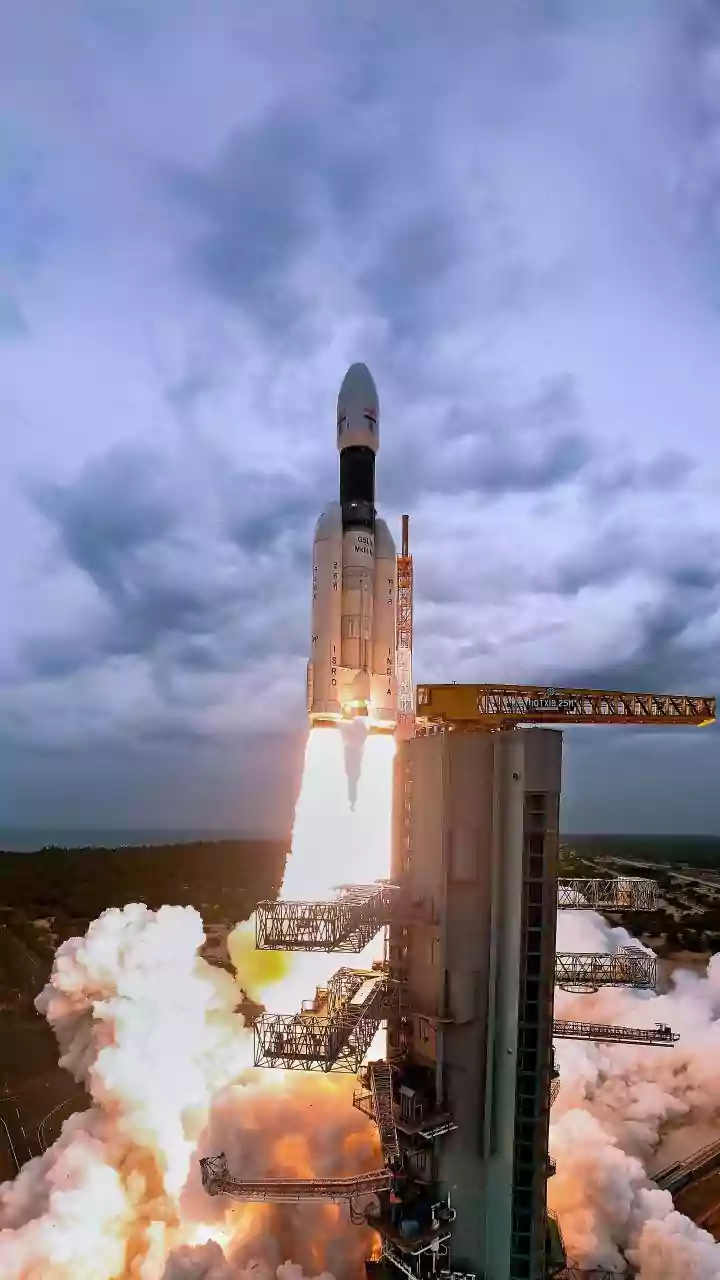
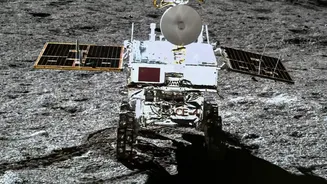
In April 2019, the Israeli lunar lander Beresheet attempted to make history with a soft touchdown on the Moon. During its final descent, mission controllers lost contact, and the spacecraft crashed into the lunar surface. While the mission's primary goal
was lost, it began an unintended, long-term experiment. Tucked away on the lander was a 'Lunar Library' created by the Arch Mission Foundation, containing a 30-million-page archive of human knowledge. It also carried a secret cargo: thousands of microscopic animals in a state of suspended animation. These unwitting astronauts were tardigrades, often called water bears, some of the hardiest creatures known to science. Their sudden, unplanned arrival on the Moon raised a tantalizing question: could they have survived?
Meet Earth's Toughest Inhabitant
To understand why this question is so compelling, you need to know about tardigrades. These eight-legged micro-animals are renowned for their almost supernatural resilience. They can survive conditions that would be instantly fatal to nearly any other life form. Scientists have exposed them to the vacuum of open space, boiled them, frozen them to near absolute zero, and subjected them to radiation doses hundreds of times higher than what a human could withstand. They achieve this by entering a state of suspended animation called cryptobiosis. In this 'tun' state, they retract their legs, expel almost all the water from their bodies, and dramatically slow their metabolism to a near standstill. Years later, upon rehydration, they can often be revived to continue their lives as if no time has passed. Previous space experiments had already shown that tardigrades could survive exposure to low Earth orbit, making them the perfect candidate for this accidental lunar test.
Survival, But Not Life
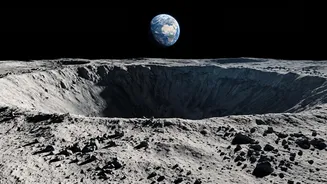
Recent analysis and studies revisiting the Beresheet crash have provided a clearer picture. While some studies suggest the impact speed might have been beyond what tardigrades could withstand, others argue that their unique packaging within the lander's archive could have cushioned them. Many experts believe it's highly likely at least some survived the initial impact and are now scattered across the crash site. However, surviving the crash is only the first hurdle. The key finding, and the heart of the matter, is that these tardigrades are not 'living' on the Moon in any active sense. They remain in their dormant, dehydrated tun state. The lunar surface is an incredibly hostile environment, with no liquid water, no oxygen, and no food. Without these essential ingredients, the tardigrades cannot reanimate, feed, or reproduce.
The Difference Between Surviving and Thriving
This is the critical distinction. An ecosystem implies an active, self-sustaining community of organisms interacting with their environment. The tardigrades on the Moon are not doing this. They are simply waiting. They are biological data points in stasis, not a fledgling lunar colony. Think of it like a seed buried in a vault; it holds the potential for life, but it is not a plant. It is not growing, photosynthesizing, or creating more seeds. For the tardigrades to 'live' on the Moon, they would need to be in a place with liquid water, a food source like microalgae, and protection from the extreme temperature swings between the long lunar day and night. None of these conditions exist at the Beresheet crash site. They are survivors, not settlers.
The Planetary Protection Question
The incident has sparked important conversations among scientists about planetary protection. The goal is to avoid contaminating other worlds with Earth life, which could interfere with the search for native extraterrestrial organisms. While the Moon is considered lifeless, and the rules are less strict than for a destination like Mars, the uncontrolled spill of thousands of organisms was a wake-up call. It highlights how private missions are changing the landscape of space exploration and the need for updated regulations. The tardigrades, unable to reproduce on their own, pose no immediate threat of taking over the Moon. But the event serves as a crucial case study for future missions to more promising worlds, where even the toughest microscopic hitchhiker could complicate one of the biggest scientific quests in human history: the search for life beyond Earth.