



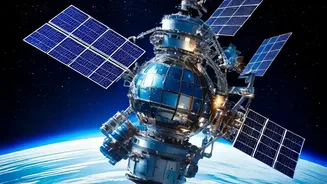
A Sky Full of Commercial Satellites
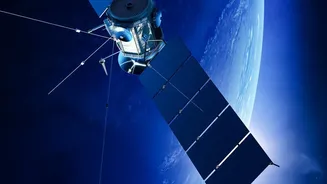
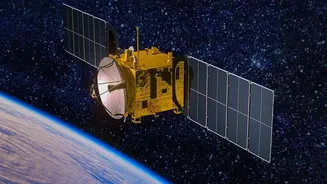
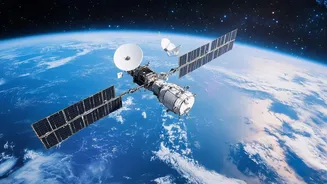
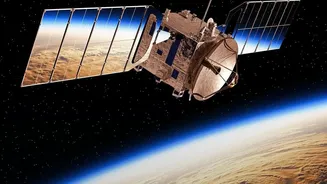
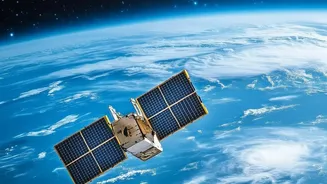
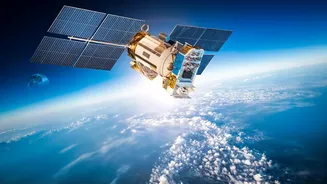
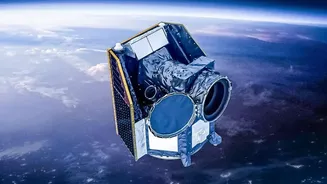
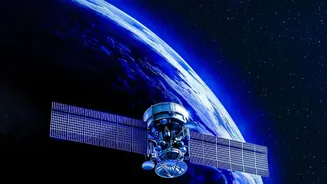
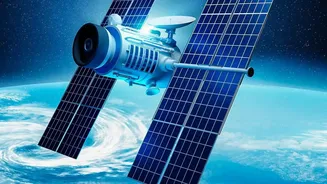
Not long ago, Earth observation was the exclusive domain of government space agencies. Today, the sector is dominated by private companies. Thanks to miniaturization and dramatically lower launch costs, firms are deploying vast constellations of small
satellites. Companies like Planet now photograph the entire landmass of Earth every single day, generating millions of images in a 24-hour cycle. This has created a firehose of data that was previously unimaginable. The market for Earth observation data and services is booming, projected to grow significantly as more industries demand this intelligence. Instead of waiting weeks for a single image of a specific location, users can now access multiple observations per day, enabling near real-time monitoring of everything from agricultural fields to global supply chains.
AI: The Brains of the Operation
This deluge of data would be useless without Artificial Intelligence to interpret it. AI and machine learning algorithms are the engines that turn raw satellite imagery into actionable insights. These systems can automatically detect and classify objects, monitor changes over time, and identify patterns that would be invisible to the human eye. For example, AI can count cars in retail parking lots to predict quarterly earnings, measure the shadows in oil tanks to estimate crude inventories, or even be run directly on satellites to flag points of interest before the data is even sent back to Earth. This fusion of AI with satellite imagery is no longer experimental; it's a core component of the modern digital economy, turning data into decision-ready products for insurance, logistics, and finance.
The Unprecedented Benefits for a Planet in Need
The applications for this technology are transformative. In agriculture, satellite data helps farmers with precision farming, optimising the use of water and fertiliser to increase crop yields and promote sustainability. It provides critical, early warnings for droughts and floods, allowing for better disaster preparedness and response. This capability is vital for mitigating the impacts of climate change. Beyond farming, this technology is used to monitor deforestation, track illegal fishing, manage urban planning, and provide crucial information for humanitarian aid efforts by mapping development levels in remote areas.
Major Governance and Ethical Questions
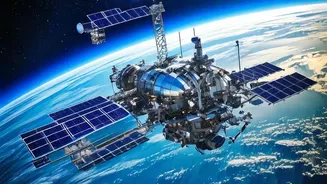
This powerful new capability also brings significant risks and ethical dilemmas. The same satellites used to monitor crops can also track military movements, creating national security challenges. A major concern is privacy; high-resolution imagery can now identify individual structures and human activities, and when combined with other data, it could potentially identify individuals without their consent. This raises questions about surveillance and the potential for misuse of location data by governments or private entities. Furthermore, the trend risks creating data monopolies, where a handful of companies have an asymmetric advantage by controlling a god's-eye view of the planet. There's also the growing physical risk of space debris, as tens of thousands of new satellites clog low-Earth orbit, increasing the chance of collisions that could threaten all space activities.
The Slow Race for Global Rules
The legal frameworks governing space were written during the Cold War and are ill-equipped for today's commercialised, crowded environment. Treaties like the 1967 Outer Space Treaty place responsibility on nations for the activities of their private companies, but enforcement is weak and the rules are too vague for the current reality. International bodies like the UN's Committee on the Peaceful Uses of Outer Space (COPUOS) and the International Telecommunication Union (ITU) are struggling to adapt. There is currently no binding international legal framework specifically to manage space debris or the complex privacy implications of commercial Earth observation. Experts argue that new, agile, and internationally coordinated governance is needed to ensure the long-term sustainability and safety of space.