







The Problem with the Chair
Our bodies are designed for movement. Yet, many of us spend more than eight hours a day in a seated position. This sedentary lifestyle, common in office jobs and daily commutes, places our bodies in an unnatural state for extended periods. When you sit,
certain muscles are forced into a shortened position while others become inactive and weak. Specifically, the hip flexor muscles at the front of your hips tighten up. Meanwhile, your gluteal muscles (in your buttocks), which are crucial for stability, essentially switch off. This muscular imbalance is a primary driver of the stiffness and pain many people experience. Over time, this can lead to poor posture as your body compensates, causing shoulders to round forward and your head to push out, straining your neck.
From Stiffness to Chronic Pain
What starts as minor stiffness can evolve into more persistent problems. Prolonged sitting puts sustained pressure on the spine. Slouching forward, a common habit when tired or focused on a screen, increases strain on the spinal discs, which can lead to premature degeneration and chronic pain. This constant postural stress doesn't just affect your back. The tightness in your hip flexors can pull your pelvis out of alignment, contributing to lower back pain. Furthermore, the forward-hunch position that many adopt at a desk can lead to chronic shoulder and neck pain. It's a chain reaction where one imbalance creates another, potentially leading to work-related musculoskeletal disorders over months or years.
Your Best Defence: Consistent Movement
The most effective antidote to sitting is not a fancy chair or a special cushion, but simply moving more often. Experts recommend breaking up long periods of sitting by standing, stretching, or walking around at least once every hour, if not every 30 minutes. Even small movements make a big difference. Try incorporating 'movement snacks' into your day. When you take a phone call, stand up and walk around. Instead of sending an email to a colleague in the same office, walk over to their desk. These small bursts of activity help to reset your posture, improve circulation, and re-engage the muscles that go dormant while you sit.
Ergonomics for Every Workspace
While movement is key, you can also reduce strain by optimising your workspace. The goal of ergonomics is to make the workspace fit your body, not the other way around. A good rule of thumb is the 90-degree principle: your elbows, hips, and knees should all be at roughly a 90-degree angle. Your feet should be flat on the floor, and the top of your computer monitor should be at or slightly below eye level to keep your neck in a neutral position. If your chair is too high, use a footrest. If your desk is too low, consider raising it with sturdy blocks. These simple adjustments can significantly decrease the physical stress on your body throughout the workday.
Simple Stretches for Instant Relief
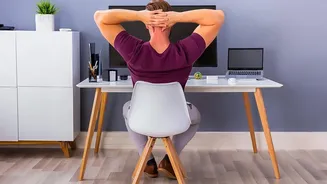
Targeted stretches can help counteract the tightening and stiffness that come from sitting. For your hips, a seated figure-four stretch (crossing one ankle over the opposite knee and gently leaning forward) can work wonders. To open up your chest and shoulders, interlace your fingers behind your back and push your chest forward. A gentle spinal twist while seated can help relieve tension in your back. And for your hamstrings, which get tight from being in a flexed position, simply extend one leg out while sitting and gently reach for your toes. Performing these stretches for even a few minutes a day can provide significant relief.
When to Consult a Professional
It is crucial to remember that while these tips can manage general stiffness, persistent or severe pain requires an individual assessment by a professional. If your back pain lasts for more than a week or two despite self-care, it's time to see a doctor. You should also seek medical help if the pain is severe, radiates down your leg, or is accompanied by numbness, tingling, or weakness. These could be signs of a more serious issue, such as a herniated disc or nerve compression, that general advice cannot solve. A doctor or a physical therapist can provide a proper diagnosis and create a personalised treatment plan for you.