




Embracing the Journey
The magic of a Tuscan road trip lies in embracing detours and discoveries. While a direct highway connects Florence and Siena, the real experience is found on the winding country roads. The best times to go are in the spring (April-June) or autumn (September-October)
when the weather is mild and the summer crowds have thinned. Renting a car is essential, but don't be intimidated. Outside of the major cities, the roads are generally safe and well-marked, though often narrow and winding. The key is to take your time, allowing for spontaneous stops. Settle into an 'agriturismo'—a farm-stay accommodation—for a few nights to fully immerse yourself in the rural rhythm of life.
The Chiantigiana Road: A Wine Lover's Dream
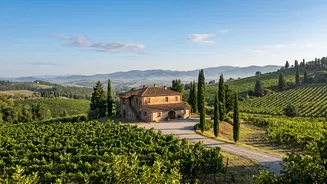
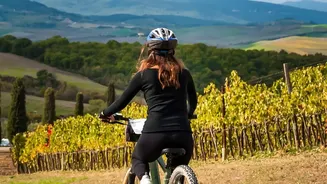
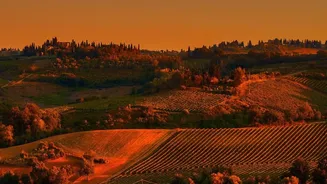
The most celebrated route between Florence and Siena is the Via Chiantigiana, or SR 222. This road is the backbone of the Chianti Classico wine region, a landscape of rolling hills, ancient vineyards, and silvery olive groves. Your first major stop after leaving Florence is often Greve in Chianti, considered the gateway to the region. Its unique triangular main square, Piazza Matteotti, has been a marketplace for centuries and is lined with artisan shops and butchers. From Greve, a short, scenic detour takes you to the tiny fortified hamlet of Montefioralle, a perfectly preserved medieval village offering picturesque views from its hilltop perch.
Historic Hilltop Towns
Continuing south on the SR 222, you'll encounter a series of enchanting hilltop towns. Panzano in Chianti sits almost exactly halfway between Florence and Siena and was historically caught in the crossfire of their rivalry. Today, it’s a peaceful town crowned by a 12th-century castle. A bit further lies Castellina in Chianti, an important military outpost for the Florentines. You can still see its impressive hexagonal defensive wall and walk along the Via delle Volte, a covered medieval street built into the ramparts. For a truly memorable stop, veer off the main road to Monteriggioni. This remarkable town is more of a castle than a village, encircled by perfectly preserved medieval walls and 14 defensive towers that offer breathtaking views across the countryside.
Siena: The Perfect Finale
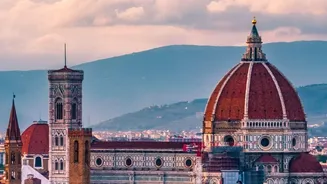
Arriving in Siena feels like stepping back in time. Unlike the Renaissance grandeur of Florence, Siena retains a distinctly Gothic character. Its heart is the magnificent, shell-shaped Piazza del Campo, widely regarded as one of Europe's greatest medieval squares. This is the stage for the famous Palio horse race and the centre of civic life. Spend your time here getting lost in the maze of narrow alleyways, climbing the Torre del Mangia for a panoramic city view, and marvelling at the black-and-white striped marble of the Duomo di Siena. It’s a city best explored on foot, making it a fitting and rewarding end to your slow-paced road trip.
For More Time: The Val d'Orcia
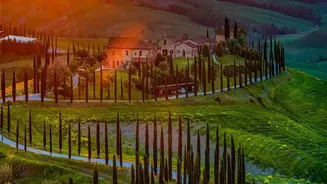
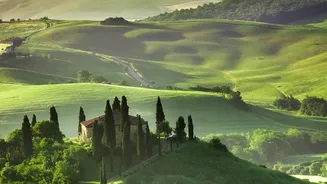
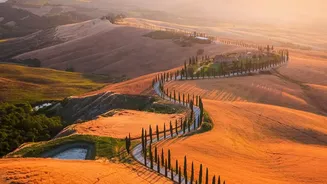
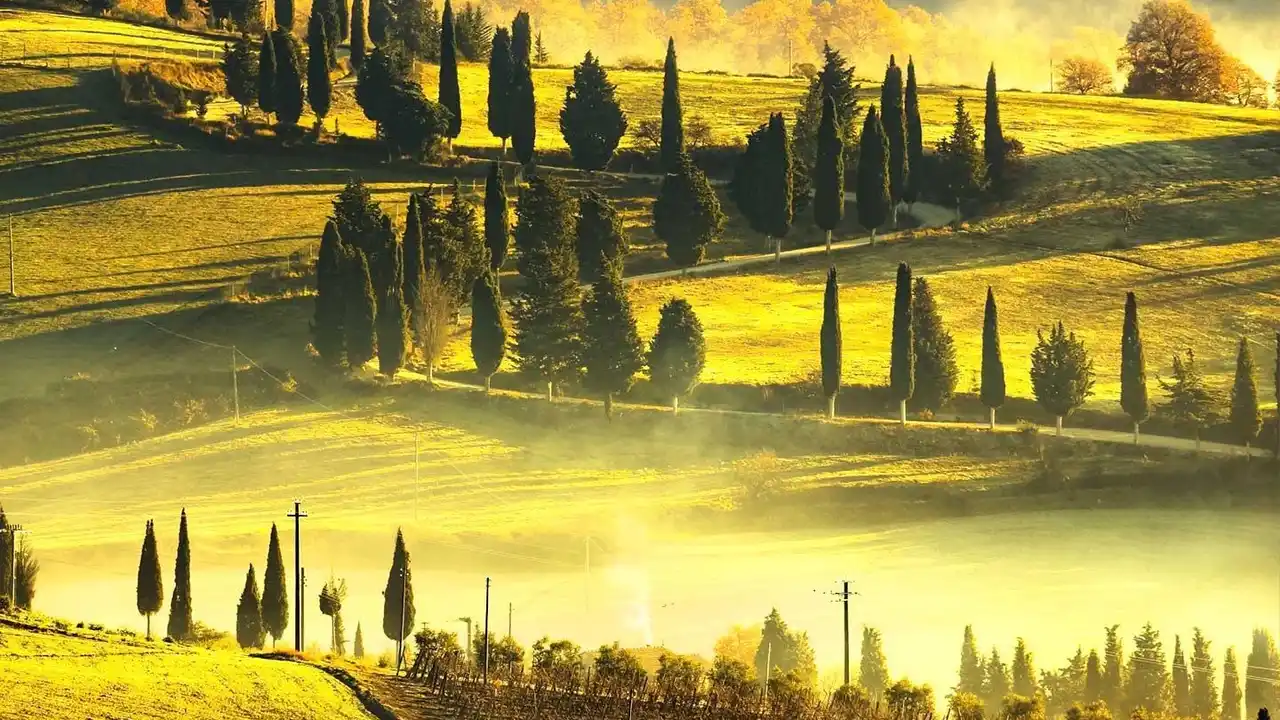
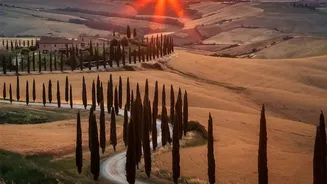
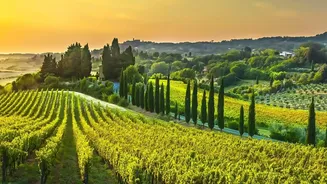
If your schedule allows for a more extended exploration, head south of Siena into the Val d'Orcia. This UNESCO World Heritage site is the Tuscany of postcards: a landscape of sweeping, golden hills punctuated by solitary chapels and iconic, cypress-lined roads. This region is home to several must-visit towns. Pienza is known as the “ideal city of the Renaissance” and is famous for its pecorino cheese. Montalcino is a medieval village renowned for its powerful Brunello wine. You can also visit the thermal spa town of Bagno Vignoni, where the main square is a large pool of thermal water, or the charmingly authentic village of San Quirico d'Orcia. This area offers a different, more expansive beauty and reinforces the joy of unhurried travel.