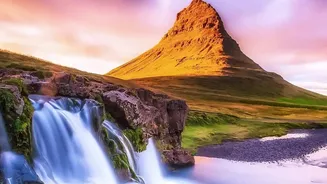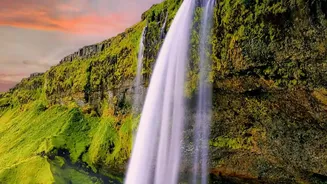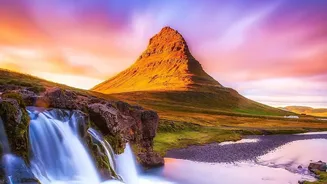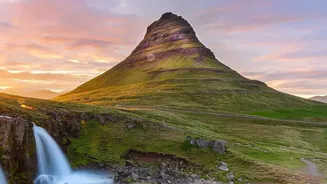






Kvernufoss: The Hidden Neighbour
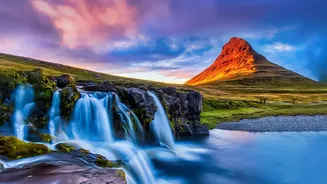
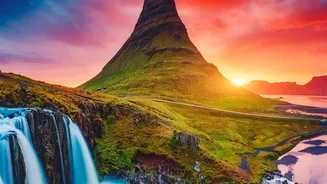
While most visitors flock to the famous Skógafoss, a quieter, more contemplative experience awaits just a short hike away. Kvernufoss is a stunning 30-metre cascade tucked away in a mossy gorge, often overlooked by the crowds. Reaching it requires a 20-minute
walk from the Skógar Museum, following a gentle path along a river. The reward is a chance to stand in a green amphitheatre of rock, often with only the sound of the water for company. You can even walk behind its curtain of water, an intimate experience that feels a world away from the busy viewing platforms of its famous neighbour. This waterfall is the essence of slow travel: a small effort for a great and peaceful reward.
Brúarfoss: The Bluest Water in Iceland
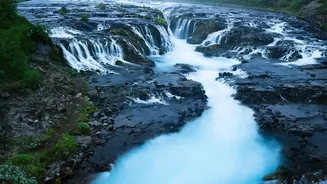
Known as 'Iceland's Bluest Waterfall', Brúarfoss isn't about grand scale but about mesmerising colour. The water here is a brilliant, almost supernatural shade of blue, a result of glacial meltwater filtering through volcanic rock. For years, finding it was a challenge, but now there are two main ways to visit. For those short on time, a new car park offers a quick five-minute walk to the main viewing bridge. But for a slower holiday, the original 3.5-kilometre hiking trail is the perfect choice. This path follows the river upstream, revealing two smaller, equally beautiful waterfalls, Hlauptungufoss and Miðfoss, along the way. The hour-long walk builds anticipation, making the final reveal of Brúarfoss’s electric blue waters even more satisfying.
Goðafoss: The Waterfall of the Gods at Dawn
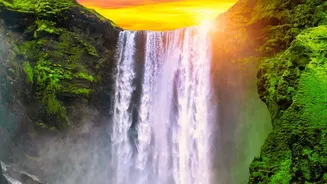
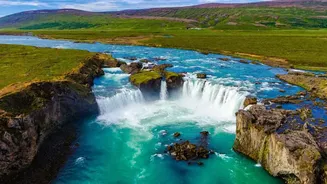
Goðafoss is one of North Iceland's most significant landmarks, both for its beauty and its history. Legend holds that in the year 1000, a chieftain marked Iceland's conversion to Christianity by throwing his statues of Norse gods into the falls. This powerful, horseshoe-shaped cascade is easily accessible from the Ring Road and has viewing platforms on both sides. To experience it slowly, avoid the midday tour bus rush. Visit at sunrise or sunset when the crowds thin out and the low light casts a golden glow on the water. The site is free and open year-round, making it easy to plan a visit during these quieter hours to reflect on its history and immense power without distraction.
Seljalandsfoss & Gljúfrabúi: An Iconic Pair
Seljalandsfoss is iconic for a reason; its 60-metre drop and the famous path that lets you walk directly behind it are unforgettable. But its popularity means it's almost always crowded. For a slower experience, visit early in the morning or late in the evening during the summer's midnight sun. After you've had your moment, take a ten-minute walk north along the cliff base. Here, you'll find Gljúfrabúi, the 'Canyon Dweller'. This stunning waterfall is hidden from view inside a narrow canyon. To see it, you must wade through a shallow stream into a moss-covered cavern, where the water roars down into a hidden chamber. It’s a magical, secretive spot that most visitors miss entirely.
Dynjandi: The Jewel of the Westfjords
If your goal is to truly get away from it all, set your sights on Dynjandi in the remote Westfjords. Often described as a bridal veil, this magnificent waterfall cascades 100 metres down a mountainside in a series of seven distinct tiers. The journey to Dynjandi is a significant part of the experience, involving long drives through some of Iceland's most dramatic and sparsely populated landscapes. From the car park, a 15-minute trail leads you up past the six smaller falls before you reach the thunderous main cascade, Fjallfoss, at the top. Visiting Dynjandi isn't a quick stop; it’s a destination that requires time and rewards those who make the journey with a sense of profound scale and solitude.