




The Invisible Problem in Your Kitchen
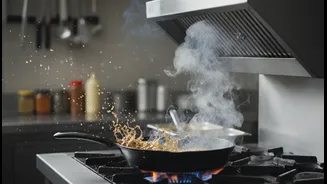
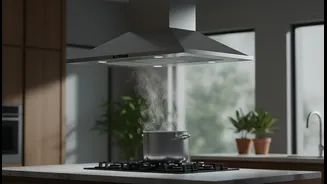
Every time you cook, you’re conducting a small chemistry experiment. The act of heating food, whether by frying, roasting, or even boiling, releases more than just steam and smells. It sends a plume of microscopic particles and gases into your home's
air. These include fine particulate matter (PM2.5), which can get deep into your lungs, and various volatile organic compounds (VOCs). If you use a gas stove, you're also adding nitrogen dioxide (NO2) and potentially carbon monoxide (CO) to the mix—pollutants known to irritate the respiratory system and worsen conditions like asthma. In fact, studies have shown that cooking can cause indoor pollutant levels to spike, sometimes exceeding outdoor air quality standards. Many of these harmful compounds are odourless and invisible, meaning the air can be hazardous even when it doesn't smell or look smoky.
More Than Just Lingering Smells
While no one enjoys the smell of last night's fish lingering until breakfast, the consequences of not using your hood go far beyond odour. Those airborne grease particles released during cooking don't just disappear. They settle on your cabinets, walls, and ceilings, forming a sticky, grimy film that attracts dust and dirt. Over time, this buildup can be difficult to clean, requiring harsh chemicals that can damage finishes, especially on wooden cabinets. Furthermore, the excess moisture from steam can also cause problems. When steam isn't vented, it raises the humidity in your kitchen, which can lead to peeling paint, warped cabinetry, and even create the perfect breeding ground for mould and mildew. In essence, neglecting your extractor fan slowly but surely degrades the cleanliness and condition of your kitchen.
Your First Line of Defence
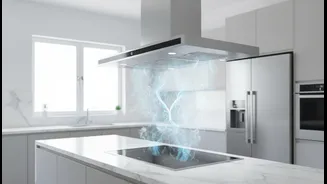
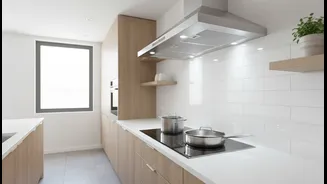
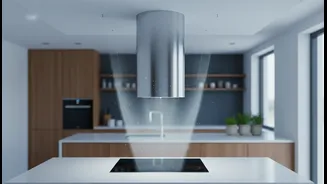
A range hood is the single most effective tool for combatting these issues. Its job is to capture smoke, steam, grease, and harmful pollutants at the source, before they have a chance to spread throughout your home. There are two main types: ducted and ductless. A ducted (or extraction) hood is the gold standard; it pulls the contaminated air and vents it completely outside your home through ductwork. A ductless (or recirculation) hood is more common in apartments where external venting isn't possible. It works by pulling air through filters—typically a mesh filter for grease and a charcoal filter for odours—and then releasing the 'cleaned' air back into the kitchen. While a ductless hood is better than nothing, it is less effective at removing all contaminants, especially gases like nitrogen dioxide.
Why We Forget to Flip the Switch
If hoods are so important, why do so few people use them consistently? One study found that only about 8% of people use their vent every time they cook. The number one complaint is noise. Many find the roar of the fan disruptive. Another common reason is forgetfulness, or the mistaken belief that the hood is only needed for major smoke events, like searing a steak or burning toast. But as we've seen, the most dangerous pollutants are often invisible. People also may not use them because they are unaware of the significant health and cleanliness benefits, viewing the appliance as more of an accessory than a necessity for a healthy home environment.
Making It a Healthy Habit
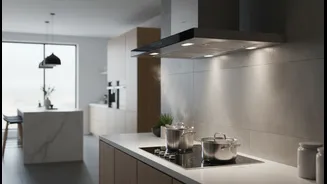
Turning your range hood into a non-negotiable part of your cooking routine is simple. The key is to create an updraft before pollutants are even generated. Turn the fan on a low setting a few minutes before you even put a pan on the heat. As you start cooking and heat increases, adjust the fan speed accordingly—higher for frying or high-heat searing. Crucially, don't turn it off the second you're done cooking. Let the fan run for another 5 to 10 minutes to clear any remaining airborne particles. Finally, remember to clean your filters. A grease-clogged filter can't do its job effectively and can even become a fire hazard. Check them monthly and clean or replace them as needed to ensure your hood is always ready to protect your home and your health.