





The Great Strawberry Divide
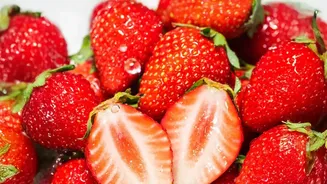
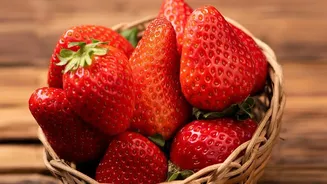
For decades, Indian strawberry lovers have faced a choice. On one hand, there are the locally grown berries, especially from the Mahabaleshwar region, which accounts for about 85% of the country's production. These strawberries are celebrated for their
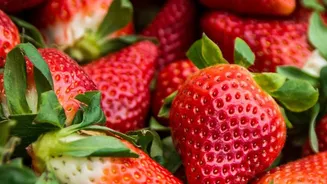
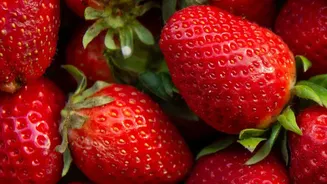
flavour and sweetness but are notoriously delicate and have a very short shelf life, sometimes lasting only two to three days. On the other hand, supermarket shelves often feature large, perfectly shaped, and robust strawberries imported from countries like the United States and Spain. While these imports excel in size, firmness, and transportability, allowing them to travel long distances, consumers often find they lack the intense flavour of their Indian counterparts. This gap in the market creates a dilemma for both farmers, who suffer from post-harvest losses, and consumers seeking the perfect berry.
A Powerful Scientific Partnership
To bridge this gap, two of India's premier institutions have joined forces. The Bhabha Atomic Research Centre (BARC), the country's hub for nuclear science, is collaborating with Mahatma Phule Krishi Vidyapeeth (MPKV), a leading agricultural university in Maharashtra. This partnership leverages BARC's extensive experience in crop improvement and MPKV's deep expertise in horticultural research and on-ground application. India's reliance on imported strawberry cultivars has long been a challenge for the sector, involving high costs and varieties not always suited for the local climate. The goal of this collaboration is clear: to develop new, homegrown strawberry varieties that combine the desirable taste of local berries with the superior size, firmness, and resilience of imported ones.
Breeding Better Berries with Nuclear Science
The core of this innovative project lies in a technique called radiation-induced mutagenesis. Scientists at BARC use gamma rays to treat strawberry plants, which speeds up the natural process of genetic mutation by thousands of times. This process creates a wide array of genetic variations within the plants. It's crucial to understand that this is not the same as creating a genetically modified organism (GMO); the radiation does not remain in the plant or the fruit. Instead, it acts as a catalyst to unlock new traits that might have taken generations to appear naturally. BARC has a proven track record in this field, having successfully developed 72 improved crop varieties, including a recently released mutant banana variety that is shorter and more wind-resistant. This same proven technology is now being applied to create a strawberry fit for the future.
The Hunt for the Perfect Strawberry
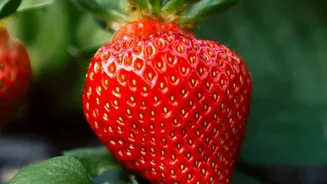
Once BARC induces the mutations, the work shifts to MPKV. Here, agricultural scientists plant the new variants and begin the painstaking process of screening and selection. They are on the lookout for a very specific combination of traits. The primary targets are increased firmness, which makes the fruit less prone to bruising during transport, and larger size, which is highly valued in the commercial market. Just as important is ensuring these new varieties retain the high sugar content and unique flavour that make Mahabaleshwar strawberries so popular. Researchers are also focused on developing varieties that are more tolerant to India's climate, especially rising temperatures that have negatively impacted recent harvests. This selection process can be lengthy, sometimes taking years to identify and stabilize a new variety with all the desired characteristics.
A Boost for Farmers and a Win for Consumers
The success of this project would have far-reaching benefits. For Indian farmers, a hardier strawberry with a longer shelf life means significantly reduced spoilage and the ability to sell their produce in distant markets, boosting their income. It would also lower their dependence on expensive imported planting materials, making cultivation more profitable. For consumers, it promises a future where they no longer have to choose between a flavourful local berry and a durable imported one. This initiative is a prime example of India's push for agricultural self-reliance, or 'Aatmanirbhar Bharat'. By developing its own high-quality cultivars, India can reduce imports, strengthen its domestic agricultural ecosystem, and enhance its position in the global fruit market.