




A Silent Crisis Unfolding
The first-ever 'State of the World’s Migratory Species' report, released by a UN biodiversity treaty, paints a stark picture. It found that nearly half (44%) of all migratory species listed for protection are experiencing population declines. More alarmingly,
more than one in five are threatened with extinction. An interim update in early 2026 showed the situation worsening, with 49% of protected migratory species now in decline. These creatures are not just beautiful; they are vital indicators of environmental health and play a crucial role in maintaining balanced ecosystems by pollinating plants, controlling pests, and transporting nutrients across vast distances. Their decline signals a broader instability in the natural world that supports all life.
The Primary Threat: Habitat Loss
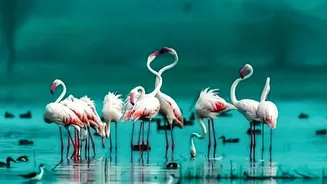
The report identified two main drivers of this crisis, both stemming from human activity. The greatest threat is the loss, degradation, and fragmentation of habitat. Three out of every four migratory species are impacted by this. As agriculture, urban centres, and infrastructure expand, the vital stopover sites that birds and other animals rely on for rest and refuelling during their epic journeys are shrinking or disappearing altogether. In India, wetlands—critical rest stops for birds on the Central Asian Flyway—are under immense pressure from urbanisation and pollution. When these habitats are degraded, the intricate chain of survival that has existed for millennia is broken.
A Barrage of Compounding Pressures
Beyond habitat loss, overexploitation—which includes unsustainable hunting and incidental capture—impacts seven out of ten protected migratory species. But the threats don't end there. Climate change is disrupting ancient migratory patterns, altering the timing of seasons and the availability of food sources. Pollution in its many forms also takes a heavy toll. Light pollution can disorient birds that migrate at night, while chemical pollutants contaminate their food and water sources. Infrastructure like power lines and wind turbines also pose a significant collision and electrocution risk, especially along dense migratory routes like those crossing India.
India’s Critical Role and Vulnerability
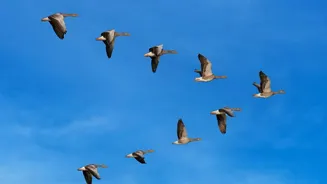
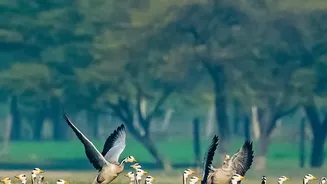
India is a crucial nexus for migratory birds, situated at the heart of the Central Asian Flyway (CAF), a route used by hundreds of species travelling between Eurasia and the Indian Ocean. The country hosts vital wintering grounds for species like the bar-headed goose and Amur falcon. However, this also means that the threats are particularly acute here. Rapid development, the draining of wetlands for agriculture, and widespread pollution are making many traditional habitats inhospitable. Studies have noted that birds arriving in India after flying thousands of kilometres are often met with choked, polluted water bodies instead of the nutrient-rich havens they need to survive the winter. The decline of these visiting species is a direct blow to India's rich natural heritage.
The Path Forward: A Shared Responsibility
The report is not just a warning; it's a call to action. It highlights that the survival of these species depends on coordinated international effort, as their journeys cross multiple national borders. Conservation cannot be confined to a single country. The findings stress the urgency of protecting Key Biodiversity Areas—over half of which currently lack protected status. For India, this means intensifying efforts to preserve its wetlands, managing infrastructure development to minimise harm, and tackling pollution at its source. The report underscores an essential truth: the fate of migratory species is inextricably linked to the health of the planet and, ultimately, to our own well-being. Their struggle for survival is a direct reflection of the sustainability of human activities.