



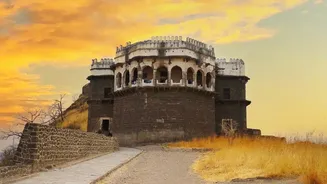
1. Raj Bhavan: A Slice of Buckingham in the Hills
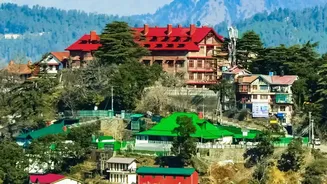
The trail begins at the magnificent Raj Bhavan, the former Government House. Built starting in 1897, its design is a stunning example of Victorian Gothic architecture, often compared to a Scottish castle or even Buckingham Palace. Originally the summer
residence for the governors of the United Provinces, this sprawling 220-acre estate is a living museum. Inside, visitors can glimpse a world of teak floors, grand chandeliers, and period furniture, largely preserved from the British era. Now the official residence of the Governor of Uttarakhand, its manicured lawns and historic golf course set a grand tone for the walk ahead.
2. High Court of Uttarakhand: Justice in a Grand Old Secretariat
A short walk away lies the imposing building of the Uttarakhand High Court. This wasn't always a hall of justice; constructed in 1900 by architect F.W. Stevens, the same mind behind the Raj Bhavan, it originally served as the Secretariat for the United Provinces. Its Gothic architecture, complete with towers and ornate facades, makes it one of the most picturesque high courts in India. When Uttarakhand was formed in 2000, this historic building was chosen to house the state's highest judicial body, seamlessly blending its administrative past with its legal present.
3. St. John in the Wilderness Church: Nainital’s Oldest Sanctuary
Nestled amidst a quiet deodar forest in Mallital is St. John in the Wilderness, one of the earliest structures in Nainital. Established in 1844, its foundation stone was laid before the town had even fully taken shape. The church got its evocative name after the Bishop of Calcutta, Daniel Wilson, fell ill and had to stay in an unfinished cabin in the woods during his visit. Inside, beautiful stained-glass windows and a brass plaque memorializing the victims of the devastating 1880 landslide offer quiet moments for reflection. This neo-Gothic church is a tranquil testament to Nainital's beginnings.
4. The Mall Road: The Colonial-Era Promenade
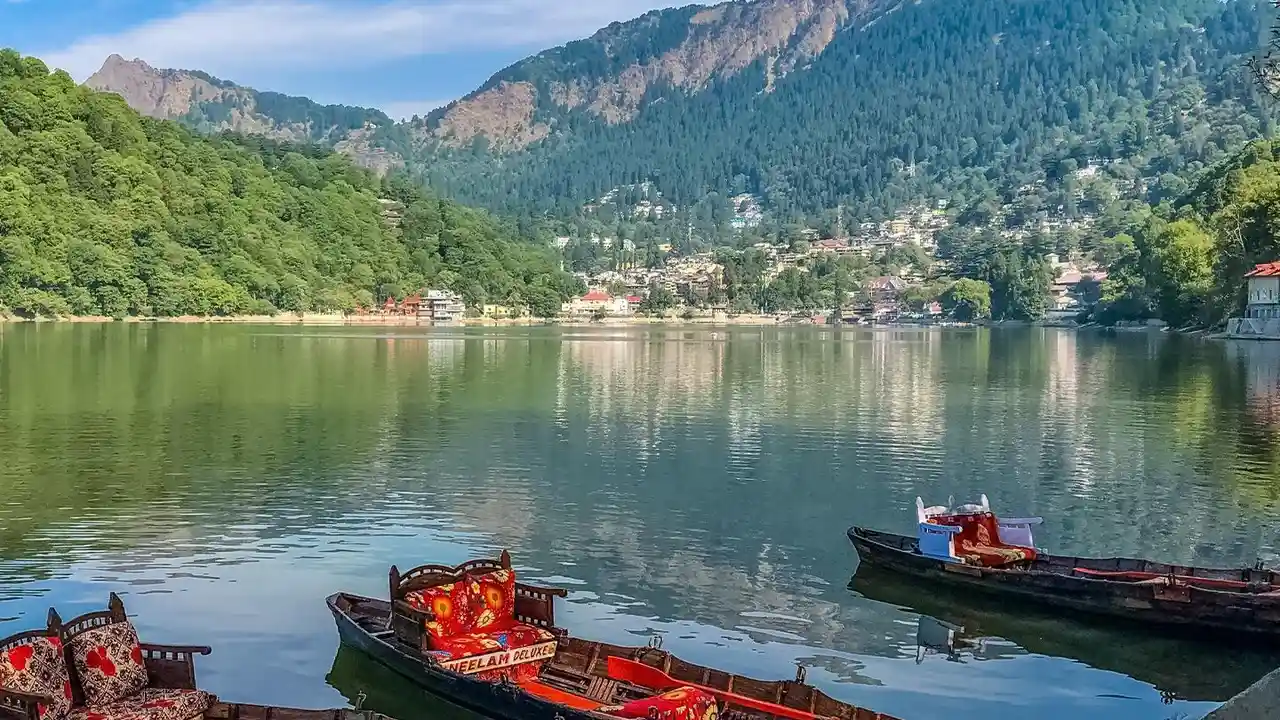
No heritage walk in Nainital is complete without a stroll down the iconic Mall Road. Constructed by the British to connect the two ends of the town, Mallital (the head) and Tallital (the foot), this road has always been the heart of Nainital. Running parallel to the Naini Lake, it was once the exclusive promenade for the British elite and upper-class Indians. Today, it remains a bustling artery lined with shops, cafes, and hotels, offering stunning lake views and a palpable sense of history with every step.
5. Naina Devi Temple: The Spiritual Anchor
While the temple itself has ancient roots, its place on this trail speaks to the layered history of Nainital. The original temple was destroyed in the 1880 landslide and subsequently rebuilt at its current location on the northern shore of the lake. According to legend, the lake was formed where the eyes (or 'nain') of the goddess Sati fell, giving the town its name. Its presence alongside colonial structures highlights the blend of cultures that defines Nainital, making it a crucial stop for understanding the town's spiritual and social core.
6. Methodist Church: India's First Methodist Chapel
Marking another significant spiritual landmark, this trail includes India’s first Methodist church, established in 1858. Its construction was initiated by Reverend William Butler, who came to India to establish the Methodist Episcopal Church. Situated in Mallital, its simple yet elegant architecture stands in contrast to the more ornate Gothic styles of other colonial buildings. This church represents the diverse religious fabric that developed in Nainital during the British era and remains an active place of worship today.
7. The Flats: From Disaster to Recreation
The final stop on the trail is The Flats, the large, open recreation ground at the northern end of Naini Lake. This area has a dramatic origin story: it was formed after the catastrophic landslide of 1880 buried the area, destroying the original Naina Devi Temple and Assembly Rooms. The British administration then converted the flattened ground into a public space for sports and gatherings. Today, it hosts everything from cricket matches to cultural festivals, standing as a unique memorial born from tragedy and repurposed for the community's enjoyment.