



The Pre-Dawn Feast: What is Sargi?
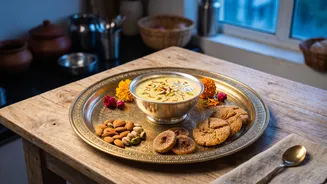
The day begins before the sun rises with a special meal known as Sargi. This isn't just any meal; it's a thali full of love and blessings, traditionally prepared and given by a mother-in-law to her daughter-in-law. The purpose of Sargi is both practical
and emotional. It contains foods like fruits, dry fruits, and light sweets that provide energy for the day-long fast ahead. More importantly, this ritual symbolises the care, affection, and strong bond shared between a mother-in-law and daughter-in-law, setting a positive and loving tone for the day. It’s a moment of familial connection, kicking off the fast not just with nourishment, but with heartfelt blessings.
A Day of Devotion and Community
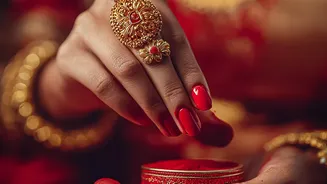
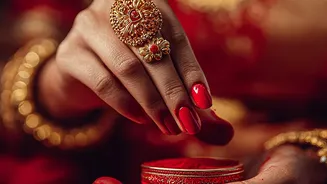
Once the Sargi is consumed, the fast begins. It is traditionally a 'nirjala vrat', meaning women abstain from both food and water from sunrise until the moon is sighted at night. The day is not just about abstinence; it's a day of celebration and togetherness. Women often dress in beautiful traditional attire, frequently in shades of red or pink which symbolise marriage and festivity. They adorn their hands with intricate Mehendi designs and gather with friends and relatives. This sense of community is a vital part of the festival, as women share stories, sing folk songs, and collectively anticipate the evening rituals, turning a day of personal sacrifice into a shared, joyous experience.
The Evening Puja and Katha
In the late afternoon or evening, women gather to perform the main Karwa Chauth puja. An important part of this ceremony involves listening to the 'vrat katha'—the story or legend behind the festival. One of the most popular tales is that of Queen Veeravati, a devoted sister to seven brothers. Desperate with hunger during her first Karwa Chauth, her brothers tricked her by creating a false moon. The moment she broke her fast, she received news of her husband’s demise. A deity later revealed the deception and advised her to re-observe the fast with strict devotion, which ultimately led to her husband’s revival. This story underscores the importance of unwavering faith and the sanctity of the fast.
The Moonrise Ritual: A Sieve and a Promise
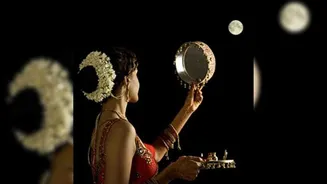
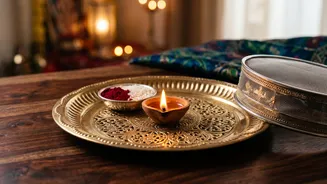
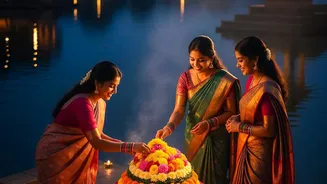
The most awaited moment of the day is the rising of the moon. Once the moon is visible, the final and most iconic ritual takes place. Women hold a thali containing a diya (earthen lamp), water, and sweets. They view the moon through a 'chhalni' or sieve, and then turn to look at their husbands through the same sieve. They offer 'arghya' (a libation of water) to the moon to seek its blessings. The sieve is significant; it’s believed to filter out any negativity and is a nod to the legend of Veeravati, ensuring one is looking at the true moon. Following this, the husband offers his wife her first sip of water and bite of food, breaking the fast in a tender moment that reaffirms their partnership.
Evolving Traditions in Modern Times
While deeply rooted in tradition, Karwa Chauth has also evolved. What was once seen solely as a wife's duty has now become a celebration of mutual love and respect in many households. It is increasingly common to see husbands fasting alongside their wives as a gesture of solidarity, support, and shared partnership. The festival has also taken on a more romantic and celebratory flavour, becoming a day for couples to express their love for one another. This evolution shows the beautiful adaptability of tradition, allowing the core spirit of Karwa Chauth—the celebration of a loving bond—to thrive and find new meaning in the contemporary world.