









From Cost Centers to Innovation Hubs
For decades, Global Capability Centers—offshore units set up by multinational corporations—came to India for one primary reason: cost savings. These centers handled functions like IT support, finance, and customer service. However, that narrative has
completely flipped. Today, India is home to over 1,800 GCCs employing more than two million professionals, and they have evolved into strategic hubs driving global innovation and value creation. Instead of simply executing tasks, teams in Bengaluru, Hyderabad, and Pune are now developing cutting-edge products, filing patents, and shaping the worldwide strategy for their parent companies. This evolution has moved India from being a low-cost destination to a high-capability partner in the global economy.
The Decisive Pivot to AI
The driving force behind this transformation is Artificial Intelligence. Multinational corporations are leveraging their Indian GCCs to build, scale, and implement AI-driven solutions across their global operations. According to a 2025 EY report, an overwhelming majority of GCCs are investing heavily in Generative and Agentic AI, using these centers as the engines for their digital transformation. These aren't just isolated experiments; Indian GCCs are creating enterprise-grade AI platforms, developing AI governance frameworks, and taking ownership of their company's global AI strategy. This pivot means India is no longer just supporting the AI revolution—it is actively helping to lead it, cementing its role as a critical hub for global tech development.
The Great Indian Talent Test
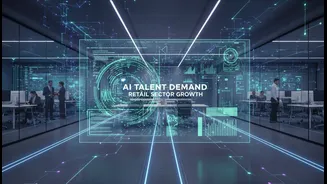
This focus on high-end AI work places India's workforce under an intense spotlight. The demand for professionals skilled in machine learning, data analytics, AI engineering, and cybersecurity is exploding. GCCs are at the forefront of this talent war, competing not just with each other but with IT services firms and product companies for the same pool of experts. According to recent reports, AI workforce penetration in sectors like retail GCCs is projected to more than triple between 2022 and 2026. This surge in demand is the ultimate test of India's ability to produce and sustain a large, high-quality AI-ready talent pool, making the country the world's second-largest base for enterprise AI talent.
A Widening Skills and Leadership Gap
Despite the growing talent pool, a significant challenge looms: a widening gap between demand and supply, especially for experienced professionals. A July 2026 report on retail GCCs highlighted this starkly: across 180 centers, there were only 320 professionals with more than eight years of AI experience, averaging fewer than two senior experts per center. This scarcity of senior leadership is a bottleneck, hindering the ability of many companies to scale their AI initiatives from pilots to full-fledged operations. While upskilling initiatives are on the rise and talent is emerging from non-tech backgrounds and Tier-II cities, the shortage of seasoned AI leaders who can connect technology with business strategy remains a critical risk.
Building an AI-Ready Nation
The industry is not sitting idle. In response to the talent crunch, 71% of GCCs have ramped up their reskilling and upskilling programs to build a future-ready workforce. Companies are investing heavily in training academies to equip employees with skills in machine learning, cloud platforms, and AI governance. This internal push is complemented by a broader trend of AI learning across India, with many professionals transitioning from non-technical roles into the AI ecosystem, often seeing significant salary jumps. The challenge now is to bridge the gap between academic training and industry demands, ensuring that the next wave of talent is not just educated, but genuinely industry-ready.