




The Viral Sensation
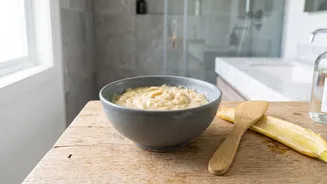
The promise is incredibly appealing: a free, natural, and waste-reducing hack that can allegedly reduce wrinkles, brighten skin, and even soothe acne. Videos demonstrating the technique have amassed millions of views, with users enthusiastically rubbing
the inside of a banana peel across their face and under their eyes. Some even refer to it as 'natural Botox'. The appeal is easy to understand. It’s a low-cost, accessible alternative to expensive creams and treatments, tapping into a desire for both natural ingredients and sustainable living. But just because something is natural and popular doesn't mean it's effective.
The Kernel of Truth
To be fair, the theory isn't based on nothing. Banana peels are known to be rich in beneficial compounds. Studies have identified antioxidants like phenolics, carotenoids, and polyphenols within the peel. They also contain vitamins and minerals, including potassium and vitamin C. In a lab setting, these components have demonstrated antioxidant, anti-inflammatory, and antimicrobial properties. It’s these compounds that form the basis of the claims, suggesting the peel can fight free-radical damage, soothe inflammation, and hydrate the skin. This scientific potential is what gives the trend a sense of plausibility.
A Reality Check from Dermatologists
Here's where the viral claims begin to slip. While banana peels do contain beneficial nutrients, dermatologists and scientists are quick to point out a major hurdle: absorption. Your skin is a formidable barrier designed to keep things out. Simply rubbing a peel on your face doesn't guarantee that those beneficial compounds can penetrate deeply enough to make a real, lasting difference. Dr. Dave Reilly, a skincare scientist, noted that while lutein (an antioxidant in the peel) exists, its concentration is low and it likely won't be topically absorbed in a meaningful way from direct application. There are no significant scientific studies that prove banana peels can actually reduce wrinkles or provide long-term benefits when used this way.
So, What's Really Happening?
If it doesn’t work, why do so many people report seeing a difference? The perceived effects are likely temporary and superficial. Any feeling of tightness is probably just the fruit's residue drying on your skin. The 'glow' you might see is due to the moisture from the peel providing a brief hydrating effect, much like splashing your face with water. Some dermatologists suggest tannins in the peel could act as a mild astringent, temporarily toning the skin. However, these effects are short-lived. The peel is too soft to be an effective exfoliant, and it certainly can't relax facial muscles to mimic the effects of Botox, which works by blocking nerve signals.
Are There Any Risks?
For most people, this hack is largely harmless, but not entirely without risk. If you have a banana allergy, applying the peel to your skin can cause a reaction. There's also the potential for skin irritation from the friction of rubbing, or clogged pores from the sugary residue left behind if not washed off properly. A more significant concern raised by some experts is the presence of pesticides on the peels of non-organic bananas, which you might be rubbing directly onto your skin. While the risks are low, they're worth considering for a hack with minimal proven benefits.