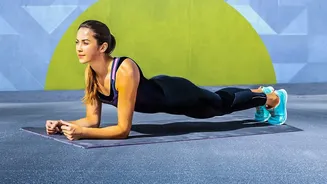




The Static Hold Stalemate
The classic plank is an isometric exercise, which means your muscles are contracting but not visibly moving. You hold a single position, and your muscles work hard to maintain that stability. This is fantastic for building muscle endurance and foundational
core strength, which supports your spine and improves posture. However, in terms of calorie burn, static holds are relatively modest. A person might burn between 2 to 5 calories per minute, depending on their body weight. The energy demand is consistent but low because there's no movement and your heart rate doesn't typically spike to the same levels as it would during dynamic activity.
The Power of Adding Movement
When you introduce movement to your plank, you shift from an isometric to a dynamic exercise. Think of variations like plank jacks, mountain climbers, or moving from your forearms to your hands. Dynamic exercises involve your muscles contracting and lengthening through a range of motion. This process of constant movement requires significantly more energy. Your body has to fuel these contractions, which instantly increases the metabolic demand of the exercise. Instead of just holding steady, your body is actively performing work, and that work requires more calories to execute.
Recruiting More Muscles for a Bigger Burn
A standard plank already engages multiple muscle groups, including your core, shoulders, and back. But active variations take this a step further by recruiting even more muscles. For example, plank jacks bring your leg muscles and glutes into the action in a major way, while plank-to-push-ups heavily engage your chest, shoulders, and triceps. By turning a core-focused exercise into a full-body movement, you are activating more muscle mass simultaneously. The more muscles you have working at once, the more energy your body needs to supply, leading to a higher overall calorie expenditure.
The Cardiovascular Connection
Perhaps the most significant factor is the cardiovascular response. Holding a static plank will raise your heart rate slightly, but introducing dynamic movements like jumping your feet in and out turns it into a cardio exercise. This added movement demands more oxygen-rich blood be pumped to your working muscles, forcing your heart and lungs to work harder. This elevated heart rate is a direct indicator of increased calorie burn. Essentially, active plank variations bridge the gap between strength training and cardiovascular exercise, giving you benefits of both in one efficient move.
Boosting the Afterburn Effect
Higher intensity workouts often lead to a greater "afterburn effect," technically known as Excess Post-exercise Oxygen Consumption (EPOC). EPOC is the increased rate of oxygen your body consumes after a strenuous workout to help it recover and return to its resting state. This process requires energy, meaning you continue to burn calories at a higher rate even after you've stopped exercising. Because dynamic plank variations are more intense and create a greater metabolic demand than static holds, they can result in a more significant EPOC effect, amplifying your total calorie burn from the workout.
Active Planks to Try
Ready to move? Try incorporating these variations into your routine. Start with 30-second intervals and focus on maintaining good form—don't let your hips sag. - Plank Jacks: From a high plank position, jump your feet out to the sides and back in again, like a horizontal jumping jack. - Mountain Climbers: In a high plank, alternate driving your knees toward your chest quickly but with control. - Plank with Shoulder Taps: Holding a high plank with your feet slightly wider for stability, tap your left shoulder with your right hand, then your right shoulder with your left hand. - Up-Down Planks: Start on your forearms, then push up one arm at a time to a high plank position, and then lower back down to your forearms.