


A Key Satellite and a Comeback Mission
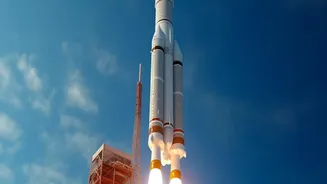
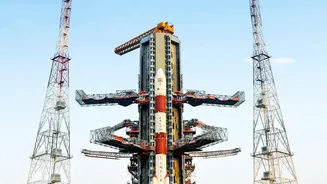
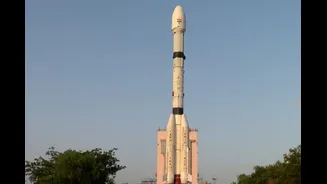
The rocket at the centre of this mission was the GSLV-F17, which successfully placed the Earth Observation Satellite, EOS-05, into its intended orbit. This launch was not just a routine success; it was a crucial comeback for the space agency. It marked
ISRO's first successful mission of 2026 after a PSLV launch failed in January. The GSLV rocket, once nicknamed the “Naughty Boy” for its early developmental setbacks, delivered a flawless performance, placing the 2,367 kg satellite precisely where it needed to be. This success has been hailed as a technical and psychological milestone, restoring momentum for the busy year ahead.
What Makes the EOS-05 Satellite Special?
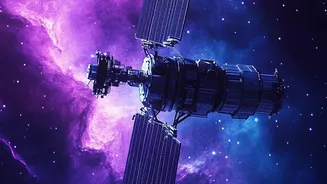
EOS-05 is a state-of-the-art Earth observation satellite, and it's India's first imaging satellite designed to operate from a geosynchronous orbit. Most observation satellites are in Low Earth Orbit, meaning they circle the globe and can only view a specific location for a few minutes at a time. EOS-05, however, will be positioned at an altitude of about 36,000 km. From this vantage point, its orbit will keep pace with the Earth's rotation, allowing it to maintain a constant watch over a large geographical area. This capability enables near-real-time monitoring of the Indian subcontinent, which is invaluable for everything from disaster management and weather forecasting to agriculture and national security.
A Morale Boost for a Demanding Year
The September 4 launch was a much-needed victory, breaking a nearly eight-month period without a successful launch and overcoming the institutional pressure that followed the January mission failure. According to ISRO Chairman V Narayanan, the agency has little time to pause, with six more launches planned for the current financial year. This success provides a vital boost of confidence and momentum as ISRO tackles an ambitious schedule. The upcoming missions include the launch of the NVS-03 navigation satellite, which will strengthen India's own GPS-like system, NavIC.
What's Next for the Gaganyaan Programme?
Perhaps the most anticipated mission on ISRO's calendar is the first uncrewed flight of the Gaganyaan programme, India's ambitious human spaceflight mission. Following the EOS-05 success, the ISRO Chairman reaffirmed that the agency is targeting the first uncrewed Gaganyaan launch (G1 mission) before the end of 2026. This mission is a critical test run designed to validate all the systems required to send humans to space and return them safely to Earth. The human-rated launch vehicle and crew escape systems are key technologies being rigorously tested. A successful G1 mission will be the final major step before India sends its own astronauts into orbit, becoming only the fourth nation in the world to achieve this feat independently.