








A Blueprint for Total Connectivity
The government's vision for Madhya Pradesh is ambitious: a commercial airport every 150 kilometres, an airstrip within a 75-kilometre radius, and a helipad in every block. This blueprint aims to decentralise air travel from major hubs like Indore and Bhopal
and extend it deep into the state's regions. A significant recent development is the central government's approval to convert ten existing airstrips into fully operational airports under the national UDAN (Ude Desh ka Aam Nagrik) scheme. The first phase targets strategic locations like Singrauli, Sagar, Neemuch, Chhindwara, and Mandla, with Singrauli being the top priority due to its remoteness. This initiative is part of a broader strategy to make Madhya Pradesh a premier aviation and logistics hub by 2030, aiming to nearly double passenger capacity and significantly expand cargo handling.
Upgraded Gateways Already Open
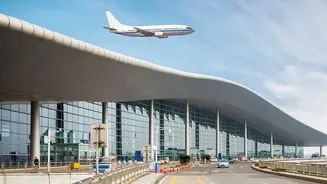
This vision isn't just on paper; several key projects are already complete and transforming travel. In Gwalior, a new, state-of-the-art terminal building has replaced the older, smaller facility, massively expanding passenger handling capacity. Similarly, Jabalpur's airport now features a new terminal and an extended runway capable of handling larger aircraft like the Airbus A320, solidifying its role as the gateway to the Mahakaushal region and its famous wildlife sanctuaries. Perhaps most emblematic of the regional focus is the newly operational Rewa airport. Upgraded from a simple airstrip and inaugurated for commercial flights in late 2024, it has become a vital engine for the Vindhya region, connecting its limestone and cement industries and boosting tourism to landmarks like the Mukundpur White Tiger Safari.
The Next Frontier: Future Cities
The focus on future access is clear in the projects now taking shape. The development of a new greenfield airport in Ujjain is a prime example. Timed for completion before the Simhastha 2028 festival, a major religious congregation, this airport is strategically placed to manage pilgrim traffic while creating a new economic corridor between Ujjain and Indore. In addition to the ten airstrips being converted, new airports are also planned for sites like Shivpuri, which will be developed for smaller aircraft to ensure last-mile connectivity. These projects are being executed under various phases of the UDAN scheme, which specifically targets underserved and unserved regions to make air travel affordable and widespread, fundamentally changing the economic geography of the state.
More Than Runways: Fuelling Economic Growth
The headline's promise of keeping "Future City Access Central" is the core of the strategy. Each airport upgrade is directly linked to an economic or cultural driver. The enhancements in Gwalior and Jabalpur support industrial, defence, and educational hubs. The new airports and routes are critical for tourism, providing faster access to Madhya Pradesh's numerous national parks, tiger reserves, and heritage sites like Khajuraho and Orchha. This infrastructure push also complements the Smart Cities Mission, which is actively upgrading urban centres like Bhopal, Gwalior, Jabalpur, and Ujjain with better public services and digital infrastructure. By connecting these emerging tier-2 cities, the plan aims to attract investment, generate employment, and ensure that economic development is more evenly distributed across the state.