

A Cosmic Lion's Roar
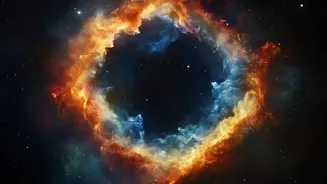
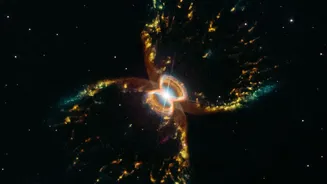
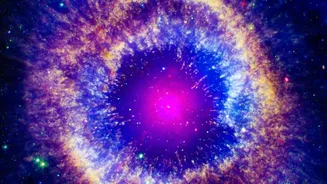
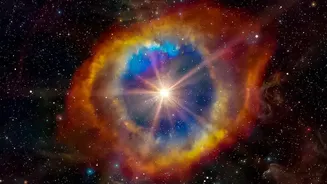
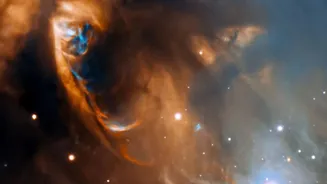
Known formally as NGC 2392, the Lion Nebula gets its nickname from its striking resemblance to the face of a lion, complete with a flowing mane. This celestial marvel, located thousands of light-years from Earth, is a planetary nebula—a beautiful, glowing
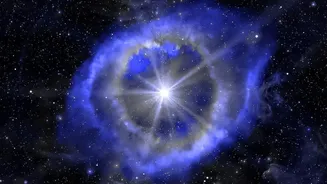
cloud of gas and dust expelled by a dying star similar to our own Sun. At the heart of this cosmic structure sits the star itself, now a blistering hot, dense core called a white dwarf. Though it appears as just a tiny point of light, like the button nose of the lion, this stellar remnant is the powerhouse sculpting the entire nebula. For thousands of years, it has been shedding its outer layers, and the material continues to expand and evolve, creating the complex scene Webb has now captured.
Webb's Infrared Revelation
While the Hubble Space Telescope gave us our first detailed look at the Lion Nebula in visible light back in 2000, the James Webb Space Telescope's powerful infrared instruments have peeled back new layers of mystery. Using its Near-Infrared Camera (NIRCam) and Mid-Infrared Instrument (MIRI), Webb can pierce through obscuring gas to see the finer details of the dust structures. This new observation reveals the intricate interplay between radiation and matter. The central star's intense energy heats a bubble of gas, causing it to expand and bulldoze through the surrounding material, creating the cavernous 'face' of the lion. Webb's view highlights features that were previously hidden, including dense clumps of dust that have managed to survive this onslaught.
A Mane of Hardy Dust Clumps
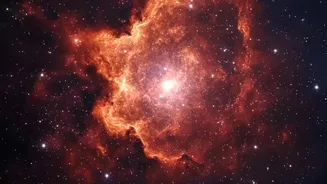
The most captivating features in the new image are the comet-like tails and tufts that form the lion's 'mane'. These are not wisps of gas but compact, resilient clumps of dust. These dusty filaments have so far withstood the destructive force of the expanding bubble of ionized gas. They are so dense that they even protect the material lying behind them from the star's harsh radiation. In the composite infrared image, these surviving dust structures glow in fiery reds and oranges, showcasing their composition and temperature. Studying these clumps gives astronomers vital clues about how dust, the raw material for future stars and planets, is produced and distributed throughout the universe by dying stars.
Unraveling a Stellar Life Cycle
Most stars in the universe, including our Sun, will not end their lives in a cataclysmic supernova explosion. Instead, they follow this more gradual, but equally dramatic, path of becoming a planetary nebula. As they run out of fuel, these lower-mass stars become unstable, puffing off their outer layers into space. The exposed hot core then illuminates this ejected material, creating the glowing spectacle we observe. Images like this one of the Lion Nebula are more than just beautiful cosmic portraits; they are scientific snapshots of a crucial process. They allow astronomers to test their models of stellar evolution and better understand how elements forged inside stars are recycled back into the cosmos, providing the building blocks for the next generation of celestial bodies.