





The Promise of a Faster Connection
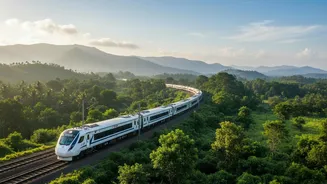
For years, travel between Karnataka's IT capital and its chief port city has been a lengthy affair, with train journeys often taking between nine and eleven hours. The proposed Vande Bharat service aims to slash this travel time dramatically, potentially
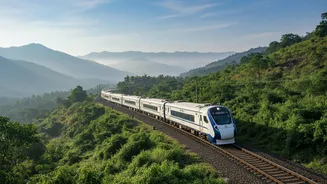
to around five hours, transforming connectivity for business, tourism, and daily commuters. This isn't just about speed; it's about providing a modern, comfortable, and reliable travel option. The South Western Railway's Mysuru Division is spearheading the effort, moving a specially manufactured 20-car rake to the region to begin the vital process of feasibility testing. The excitement is palpable, but the path forward runs through a significant geographical and engineering challenge.
The Formidable Ghat Section
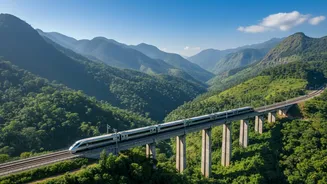
The main obstacle is the 55-kilometre Sakleshpur-Subrahmanya Road railway line, a stretch that cuts through the magnificent but treacherous Western Ghats. This section is known for its steep gradients, numerous sharp curves, and a high density of tunnels and bridges—specifically, 57 tunnels and 226 bridges. The terrain has historically posed operational challenges for all trains, affecting speed, braking, and overall safety. Conventional trains often require additional 'banker' locomotives to be attached to safely navigate the steep slopes, a process that is not practical for the integrated design of a Vande Bharat trainset. Furthermore, the area is prone to landslides, especially during the heavy monsoon season, adding another layer of complexity to ensuring safe and consistent operations.
Putting the Train to the Test
This is where the trial runs become paramount. Since mid-August 2026, personnel from the Research Designs and Standards Organisation (RDSO) have been conducting intensive field trials on the ghat section. These tests are not just about speed. They are meticulously evaluating every aspect of the train's performance, including its stability on sharp curves, its acceleration on inclines, and, most importantly, its braking capabilities on steep descents. A key technology being assessed is a specially equipped Automatic Emergency Braking (AEB) system. This system is designed to automatically apply the brakes if the train exceeds the permitted speed limit of 30 kmph on the ghat, providing a critical safety backup. The trials, scheduled to continue until August 20, are designed to see if this modified Vande Bharat rake can handle the unique stresses of the route safely and reliably without the need for external support engines.
What Happens After the Trials?
The successful completion of these trials is the most crucial step, but it is not the final one. Once the RDSO team gathers all the necessary data on the train's performance, they will compile a detailed report. This report will then be submitted for a thorough review by the Railway Board and the Commissioner of Railway Safety. Only after these top bodies grant their safety clearances can a commercial service be officially authorised and launched. The launch of the service had been anticipated earlier but was delayed due to the non-availability of a Vande Bharat rake equipped with the mandatory emergency braking system for this specific route. Now, with the specially modified train on-site and undergoing tests, all eyes are on the results to determine the final timeline.