
What is Ocean Iron Fertilization?
Imagine parts of the ocean as a garden with fertile soil but missing one key nutrient. In vast areas, particularly the Southern Ocean, the nutrient that's in short supply is iron. Ocean iron fertilization (OIF) is a geoengineering concept based on a simple
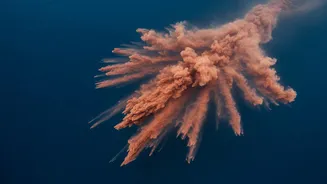
premise: if you add this missing iron to the water, it will trigger a massive bloom of phytoplankton. These microscopic marine plants are the foundation of the ocean food web and, like plants on land, they absorb carbon dioxide (CO2) from the atmosphere through photosynthesis. The natural version of this process happens when iron-rich dust from deserts or volcanic ash blows over the ocean, sparking huge blooms visible from space. The artificial version proposes doing this deliberately, on a much larger scale, to turn the oceans into a giant carbon sponge.
The Seductive Promise: A Planetary Sponge
The potential upside of OIF is enormous, which is why the idea has persisted for decades despite the controversy. The theory is straightforward: as the massive phytoplankton bloom grows, it pulls huge amounts of CO2 out of the surface water. When these phytoplankton die, they sink, carrying the carbon with them. This process, known as the 'biological carbon pump', ideally transports the carbon to the deep ocean. If it sinks deep enough, that carbon can be locked away in sediments for hundreds or even thousands of years, effectively removed from the atmosphere. In a world struggling to reduce emissions, the prospect of actively removing existing carbon at a planetary scale is incredibly tantalizing. Proponents see it as a potentially powerful tool to help reverse the accumulation of greenhouse gases.
Fresh Clues Reveal Major Side Effects
However, recent studies and analyses are providing a crucial reality check, highlighting the significant and dangerous side effects. The biggest issue is that what happens in theory doesn't play out so cleanly in the complex ocean environment. A major concern is the creation of vast, low-oxygen 'dead zones'. As the enormous plankton bloom dies and sinks, its decomposition is carried out by bacteria that consume huge amounts of oxygen from the surrounding water, potentially suffocating other marine life. Furthermore, this decomposition process can release other powerful greenhouse gases, like nitrous oxide and methane, which are many times more potent than CO2, potentially negating the climate benefits. There is also no guarantee that the new blooms wouldn't consist of toxic algae, creating harmful algal blooms that could poison the food web from the bottom up.
Unpredictable Ecosystem Disruption
Beyond the chemical side effects, large-scale iron fertilization would represent a massive, uncontrolled experiment on the marine ecosystem. Deliberately changing the base of the food web will have unpredictable ripple effects. Some species might thrive while others starve. The process could also 'steal' other vital nutrients from the surface water, effectively starving downstream ecosystems as ocean currents move the now nutrient-depleted water across the globe. A recent modelling study from July 2026 suggested that conducting fertilization at higher latitudes might reduce some of these ecological impacts, but it underscores the complex trade-offs involved. The efficiency is also in question; many studies suggest that only a small fraction of the carbon captured by the bloom actually makes it to the deep ocean for long-term storage, with most being recycled in surface waters.
A Divisive Path Forward
Given the high risks, there is deep division in the scientific community. The UN Convention on Biological Diversity has a moratorium on commercial ocean fertilization projects, reflecting widespread concern. Project Drawdown, a leading climate solutions resource, currently does not recommend OIF due to the high environmental risks and uncertain effectiveness. Yet, the climate crisis is so severe that many scientists argue it would be irresponsible not to study it further. A February 2026 paper saw a team of researchers call for a new generation of larger, longer, and more carefully monitored field trials. They argue that the small experiments of the past were not designed to answer the crucial questions about long-term carbon storage and ecological safety. They propose large-scale experiments with clear 'go/no-go' criteria to properly assess if OIF can be a safe and effective tool, or if it's simply too dangerous to pursue.