




Meet the $60 Loaf
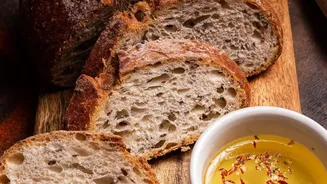
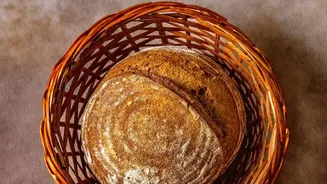
Walk into Rye by Martin Auer in SoHo, and you won’t find display cases crowded with croissants or cookies. The minimalist, gallery-like space is a stage for just one star: a 3.3-pound, 100% rye sourdough. The bakery is the first U.S. outpost for Martin Auer,
an Austrian baker with a family business rooted in Graz. While the price has sparked considerable online debate and a fair share of outrage, curious customers are still lining up. The loaf can be purchased whole for $60, by the half for $30, or as a quarter for $15, a portion some say is comparable to a standard loaf elsewhere. But the central question remains: what could possibly justify that price?
It’s Not Just Flour and Water
According to the bakery’s owners, the price tag is a reflection of time, technique, and top-tier ingredients. The recipe uses just organic rye flour imported from Austria, water, and salt. The fourth, and most crucial, ingredient is time. The sourdough starter is fed daily, and the entire process—from mixing the dough to a 24-hour fermentation, baking, and a mandatory resting period of at least eight hours—is a multi-day affair. This long, slow fermentation is key to developing the bread’s complex flavor and making it more digestible, a hallmark of true artisanal baking. The entire process happens on-site in a two-ton oven brought over from Germany, turning a simple food into a product of intensive craft.
The Economics of Baking in SoHo
Beyond the specialized ingredients and time-consuming labor, the bakery’s location is a major factor in its pricing. Operating a retail space in SoHo, one of Manhattan's most expensive neighborhoods, comes with astronomical rent. Add to that the high labor costs in New York City, where skilled bakers command competitive wages for demanding hours. While the gross margin on baked goods can be high, net profit margins for bakeries are often squeezed by fixed costs like rent and labor, typically settling between 4-15%. Co-owner Tim Auer has noted that the price reflects all these costs, from importing flour to baking on Lafayette Street. In Austria, a similar loaf from Martin Auer costs less than a third of the New York price.
Who Buys a $60 Loaf of Bread?
The target customer isn't someone grabbing a quick loaf for school lunches. The purchase is a statement, a luxury experience akin to buying fine wine or cheese. This trend taps into a growing consumer desire for products with clear provenance, craftsmanship, and perceived health benefits. The rise of heritage and ancient grains in baking speaks to a movement of people seeking more flavorful and nutritious alternatives to mass-produced foods. Some analysts also point to the “little treat economy,” where younger consumers, facing daunting big-ticket expenses like housing, find it easier to justify small, high-quality splurges. For these buyers, it’s not just bread; it's an affordable indulgence and a connection to a traditional craft.
The Great Bread Divide
While some defend the loaf as an amazing product and a boon for bringing attention to rye bread, the $60 price tag has also drawn significant backlash. Critics see it as a symbol of economic disparity and the gentrification of basic foods. When a staple that has sustained civilizations for millennia becomes a luxury good, it raises uncomfortable questions about access and affordability. Is this the natural evolution of the artisanal food movement, where consumers pay a premium for quality and transparency? Or does it represent a cultural moment where even the most fundamental foods are becoming status symbols, leaving many people behind? The debate itself proves one thing: in 2026, a loaf of bread can be about much more than just something to eat.