






The Lure of the Megawatt
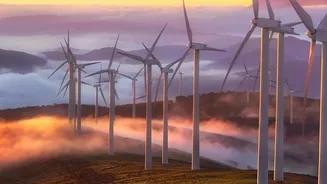
India has ambitious renewable energy goals, aiming for 500 GW of non-fossil fuel capacity by 2030. To meet these targets, the nation has seen a massive push for large-scale solar and wind projects. The primary metric of success has often been the installed
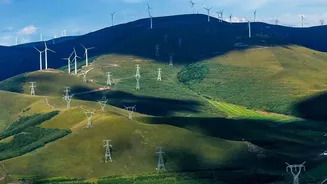
capacity, measured in megawatts (MW) or gigawatts (GW). While impressive, this focus on “headline megawatts” can obscure a project’s true impact. Land is a finite and contentious resource in a densely populated country, and massive solar farms can compete with agriculture, leading to conflicts. A recent study noted that a significant percentage of existing solar projects were built on agricultural or natural habitats, highlighting potential impacts on food security and local livelihoods. This is where the narrative begins to shift from “how much” power to “how” it is generated.
A New Vision on the Water
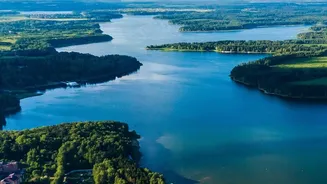
Enter the concept of the “Surya Sarovar,” or sun reservoir. This idea is powerfully demonstrated by the rise of floating solar photovoltaic (FSPV) projects. Instead of occupying vast tracts of land, these projects deploy solar panels on the surfaces of water bodies like dams, reservoirs, and canals. The headline-grabbing example is the plan for a 1,000 MW floating solar plant on the Matatila Dam in Lalitpur, part of the arid Bundelkhand region. This approach represents a fundamental shift in design philosophy. Recognizing the potential, the Union Cabinet recently approved the Pradhan Mantri Surya Sarovar Yojana, a scheme aiming to develop 5,000 MW of floating solar projects on India's reservoirs, signaling a major policy pivot towards this innovative solution.
Designed for a Dry Land
The genius of floating solar lies in its integrated benefits, which are especially relevant for a region like Bundelkhand, historically plagued by water scarcity and drought. Firstly, it completely avoids land acquisition conflicts, a major cause of delays and social unrest for infrastructure projects. Secondly, the panels floating on the water's surface reduce evaporation, conserving a precious resource essential for drinking and irrigation. Thirdly, the water provides a natural cooling effect for the solar panels, which can increase their efficiency and energy output compared to ground-mounted systems that can overheat. This synergy creates a solution that doesn't just produce energy but also helps solve critical local problems.
More Than Just Generating Energy
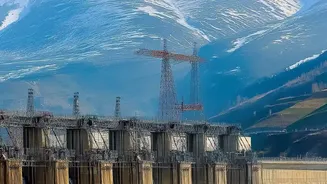
The 'Surya Sarovar' model is about creating value beyond the electricity grid. By placing solar installations on existing infrastructure like the reservoirs of hydroelectric dams, these projects can share transmission lines and other infrastructure, making grid integration smoother and more cost-effective. For the Bundelkhand region, which is being positioned as a new energy hub with numerous solar projects underway, this kind of thoughtful planning is crucial. The dual-use nature of the land—or in this case, water—means that agricultural areas are preserved, and water security is enhanced. This holistic approach addresses environmental concerns and community needs simultaneously, making renewable energy a partner in regional development rather than a competitor for resources.
A Blueprint for India's Energy Future?
Floating solar is not without its challenges. The initial setup costs are higher than for land-based projects due to the need for specialized floating structures and mooring systems that can withstand wind and waves. There are also environmental considerations, as the impact of covering large water surfaces on aquatic ecosystems needs careful assessment. However, as technology matures and scales up under schemes like the PM-SSY, these costs are expected to fall. The lesson from the floating solar concept is clear: the most successful energy projects of the future will be those designed with their specific environment in mind. They will be integrated, multi-benefit solutions that prove India's green transition can be both ambitious in scale and intelligent in its execution.