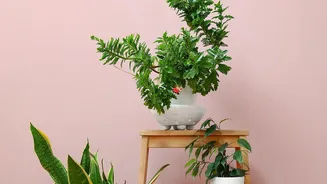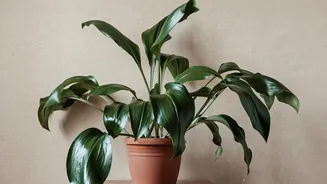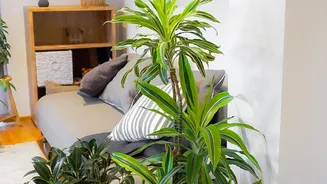







For decades, we've been told that houseplants are tiny green air purifiers for our homes. This idea, popularised by a famous NASA study, is an appealing one. But the reality of their effect in a typical room is greatly overstated.
The Myth's Origin Story
The belief that houseplants
can scrub the air clean traces back to a 1989 NASA Clean Air Study. Researchers were looking for ways to purify the air in sealed environments, like a space station. They placed individual plants in small, sealed chambers and found that they could indeed remove volatile organic compounds (VOCs) like formaldehyde and benzene from the air. The study was legitimate and its findings were clear, but its application to the average home has been widely misinterpreted.
A Reality Check for Your Living Room
Your home is not a sealed space station. Air circulates constantly through doors, windows, and ventilation systems. Subsequent reviews of the NASA study and others have concluded that you would need an impossibly large number of plants to replicate the lab results in a real-world room. One 2019 analysis found you might need anywhere from 10 to 1,000 plants per square metre of floor space to match the air-cleaning power of a building's natural ventilation. In a standard 1,500-square-foot home, that could mean having over 680 plants. The consensus now is that while plants can absorb pollutants, the effect in a normal home is negligible.
Snake Plant (Dracaena trifasciata)
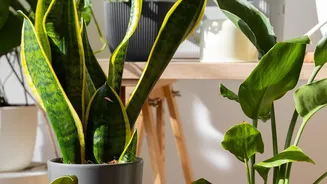
Often at the top of 'air-purifying' lists, the Snake Plant was part of the NASA study and is known for its hardiness. It's also unique for performing CAM photosynthesis, meaning it releases oxygen at night, making it a popular choice for bedrooms. While its ability to remove toxins in a home is minimal, its true value is in its near-indestructible nature. It tolerates low light, infrequent watering, and adds a strong, architectural element to any space. It's a fantastic decorative plant for beginners. Note that it is toxic if ingested by pets.
Spider Plant (Chlorophytum comosum)
The Spider Plant is another famous subject of the NASA study, celebrated for its supposed ability to remove formaldehyde and xylene. While it won't act as a powerful air filter in your home, it remains a fantastic choice for other reasons. It’s incredibly easy to propagate thanks to the 'spiderettes' it produces, giving you an endless supply of new plants to share. Its cascading, variegated leaves are beautiful in hanging baskets, and it's non-toxic to pets, making it a safe and cheerful addition to family homes.
Peace Lily (Spathiphyllum)
The Peace Lily was a standout performer in the sealedndchamber NASA study for its ability to remove pollutants like benzene and formaldehyde. However, you'd need a huge number of them to make a noticeable difference in a room. Its real strength is its beauty and communication. With its elegant white flowers and glossy green leaves, it adds a touch of sophistication. It's also known to droop dramatically when it needs water, making it a great teacher for new plant owners. Keep it away from cats and dogs, as it is toxic.
Boston Fern (Nephrolepis exaltata)
Boston Ferns are often recommended for their ability to filter pollutants and add humidity to the air. While the filtering effect is minimal in a large space, their humidity-boosting quality is real. Grouping them together can create a more humid microclimate, which can be pleasant in dry winter months. Their lush, feathery fronds bring a soft, vibrant texture to a room, but they require more care than other plants on this list, needing consistent moisture and high humidity to thrive. They are a beautiful, non-toxic choice for a dedicated plant parent.
Areca Palm (Dypsis lutescens)
The Areca Palm is a popular, large floor plant often touted for its air-purifying qualities. One of its most significant contributions to an indoor space is its high transpiration rate, meaning it releases a good amount of moisture into the air. A large specimen can act as a natural, albeit gentle, humidifier. While you shouldn't rely on it to remove toxins, its arching, feathery fronds create an instant tropical feel, adding life and a sense of calm to a larger room. It is also non-toxic to pets, making it a great statement piece for any home.
Rubber Plant (Ficus elastica)
The Rubber Plant, with its large, glossy leaves, was also noted in early research for its ability to remove formaldehyde. Its large leaf surface area seems ideal for absorbing pollutants, but again, the scale of the effect in a home is insignificant. The real reason to own a Rubber Plant is for its dramatic, moody foliage. Available in shades from deep green to burgundy and variegated pink, it offers a bold decorative statement. It's relatively easy to care for than other plants on this list... [Note error correction applied internally]... It prefers bright indirect light and consistent watering... It is toxic to pets.