








An Expanded Bloc in a Fractured World
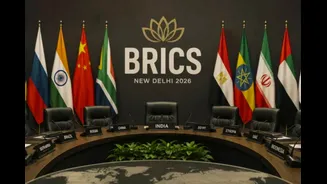
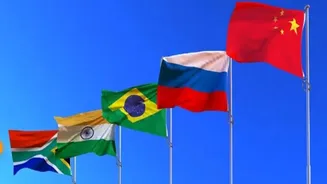
The BRICS of 2026 is a vastly different entity from its original conception. What started as a grouping of four major emerging economies—Brazil, Russia, India, and China—has evolved into an 11-member coalition with the additions of South Africa, Egypt,
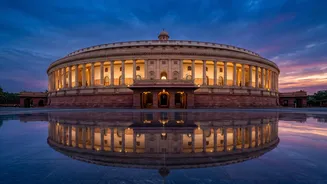
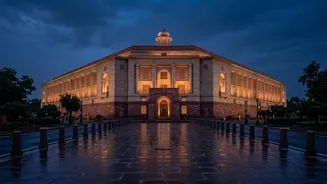
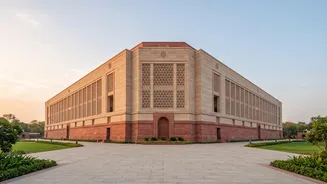
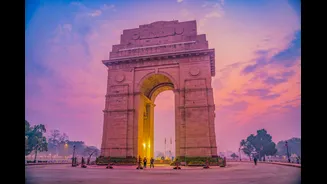
Ethiopia, Iran, Saudi Arabia, the UAE, and Indonesia. This expanded forum now represents a significant portion of the world's population, economy, and energy resources. The summit, scheduled for September 12-13 in New Delhi, convenes at a time of significant global turbulence, including geopolitical conflicts, supply chain vulnerabilities, and economic headwinds facing the Global South. India's challenge is to navigate these complexities and steer the diverse group towards a common, constructive agenda.
Pillar 1: Building Economic Resilience
A core priority for India is bolstering the resilience of BRICS economies against global shocks. The agenda emphasizes strengthening supply chains, particularly in pharmaceuticals and semiconductors, to reduce vulnerabilities exposed in recent years. New Delhi is also championing initiatives to support Micro, Small, and Medium Enterprises (MSMEs), which form the backbone of these economies. Proposals include a BRICS invoice discounting mechanism to ease access to trade finance and a dedicated portal to connect MSMEs across member nations. This focus on practical economic cooperation aims to create more robust and predictable trade policies among members.
Pillar 2: Driving People-Centric Innovation
Innovation is the second key pillar of India's chairship, with a distinct focus on using technology for socio-economic development. The agenda highlights collaboration on artificial intelligence, fintech, and digital public infrastructure. India is pushing for a BRICS Digital Public Infrastructure Repository to facilitate knowledge sharing and the adoption of scalable digital solutions for service delivery. This is not about technology for its own sake, but about leveraging innovation to improve lives, expand educational opportunities, and create future-ready growth that benefits ordinary citizens across the bloc.
Pillar 3: Deepening Cooperation and Reforming Multilateralism
India aims to move BRICS beyond political declarations and toward deeper, practical cooperation in areas like energy security, health, and sustainable development. A significant part of this involves advocating for 'reformed multilateralism'. New Delhi has been a vocal proponent of reforming global governance institutions like the UN Security Council, IMF, and World Bank to better reflect today's multipolar world and give a greater voice to developing nations. Within BRICS, this translates to strengthening the New Development Bank as a key financing instrument for infrastructure and sustainable projects in the Global South.
Pillar 4: A Commitment to Sustainability
The fourth pillar of India's agenda is sustainability, which aims to ensure that economic growth and environmental responsibility go hand-in-hand. Key priorities include accelerating efforts on climate action, promoting green finance, and cooperating on energy transitions, including biofuels and hydrogen. This focus is critical for the bloc, which comprises major energy producers and consumers. A BRICS Digital Centre of Excellence for Smart Grids and Energy Storage has been launched to foster collaboration on building more efficient and resilient energy systems.
Implications and India's Balancing Act
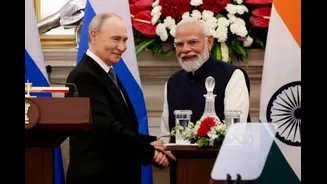
India's agenda is a deliberate attempt to steer BRICS towards a development-focused, non-confrontational path, acting as a bridge between the Global South and the West. New Delhi has firmly rejected proposals for a common BRICS currency, preferring instead to promote trade in national currencies to reduce dollar dependence without causing major disruption. This pragmatic approach seeks to prevent the bloc from becoming an overtly anti-Western coalition, a direction some members might prefer. By focusing on concrete outcomes in trade, technology, and finance, India hopes to cement its role as a leading, consensus-building voice for the developing world while managing the diverse and sometimes competing interests within the expanded group.