

The Universal Urge for a Salty Snack
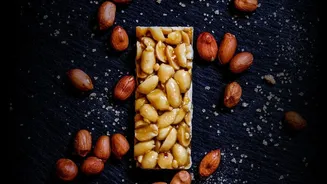
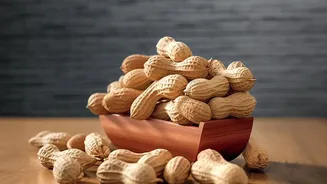
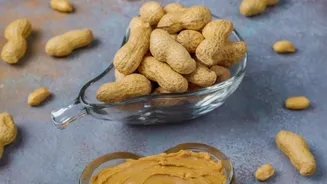
There’s something deeply satisfying about a salty snack. Whether it’s peanuts at a cricket match, a bag of chips with a sandwich, or spiced nuts at a bar, the craving for salt is a common human experience. Peanuts, in particular, offer a perfect combination
of salt, fat, and protein, making them an incredibly popular choice. But as anyone who has indulged in a generous portion knows, that satisfying saltiness is almost immediately followed by a powerful thirst. This sensation is so reliable that bars have famously used it for decades, knowing that a bowl of salty nuts often leads to ordering more drinks. While it might seem like a simple cause and effect, the journey from that first salty peanut to your desperate need for a glass of water involves a complex and fascinating interplay between your cells, your brain, and your hormones.
How Salt Disrupts Your Body’s Water Balance
To understand the thirst that follows a salty snack, we first need to look at sodium's role in the body. Sodium is an essential electrolyte that helps with nerve function, muscle contraction, and, most importantly, maintaining fluid balance. Your body is a finely tuned machine that works tirelessly to keep the concentration of solutes, like salt, in your blood within a very narrow, healthy range. When you eat salty peanuts, the salt is absorbed into your bloodstream through your small intestine. This influx of sodium increases the salt concentration in the fluid surrounding your body's cells, a state known as hypernatremia. This creates an osmotic imbalance. Because the fluid outside the cells is now saltier than the fluid inside, water is pulled out of the cells to try and dilute the salt in the bloodstream. Your cells begin to dehydrate, and this is when your body’s alarm systems kick in.
Your Brain’s Thirst Centre Takes Command
Your brain acts as the command centre for managing hydration. In a region called the hypothalamus, there are specialized sensors called osmoreceptors. These microscopic guards constantly monitor the saltiness, or osmolality, of your blood. As your salt-concentrated blood flows through the brain, the osmoreceptors detect the imbalance. When they sense that the blood is too salty and that cells are losing water, they send urgent signals to two places. First, they trigger the conscious sensation of thirst, a powerful instinctual drive that is nearly impossible to ignore. This is your brain’s direct command to you: 'Drink water now!'. The hypothalamus is essentially the body's 'thirst center', and this is its primary tool for getting you to help fix the problem.
The Hormonal Response to Conserve Water
Simultaneously, the brain initiates a less obvious, but equally crucial, internal response. The osmoreceptors and hypothalamus stimulate the pituitary gland to release a hormone called vasopressin, also known as antidiuretic hormone (ADH). The name 'antidiuretic' hints at its function: it works against diuresis, which is the production of urine. Vasopressin travels through the bloodstream to the kidneys and delivers a clear instruction: hold on to water. It makes the collecting ducts of the kidneys more permeable to water, allowing more water to be reabsorbed back into the body instead of being flushed out as urine. This makes your urine more concentrated and reduces water loss, conserving the body's precious fluid reserves while you (hopefully) respond to the thirst signal and drink some water to dilute the salt you consumed.
Listening to Your Body’s Signals
This entire process—from the cellular water shift to the hormonal cascade—is a beautiful example of homeostasis, your body's ability to maintain a stable internal environment. While the immediate effect of eating salt is thirst, some research suggests that over longer periods, the body can adapt in more complex ways, even producing its own water and increasing hunger rather than thirst. However, in the short term, the link is clear and direct. The thirst you feel after eating salty peanuts is not a flaw; it's a feature. It’s a highly effective survival mechanism ensuring your cells remain properly hydrated to function correctly. So the next time you find yourself reaching for a drink after a salty snack, you can appreciate the intricate biological dance happening behind the scenes.