




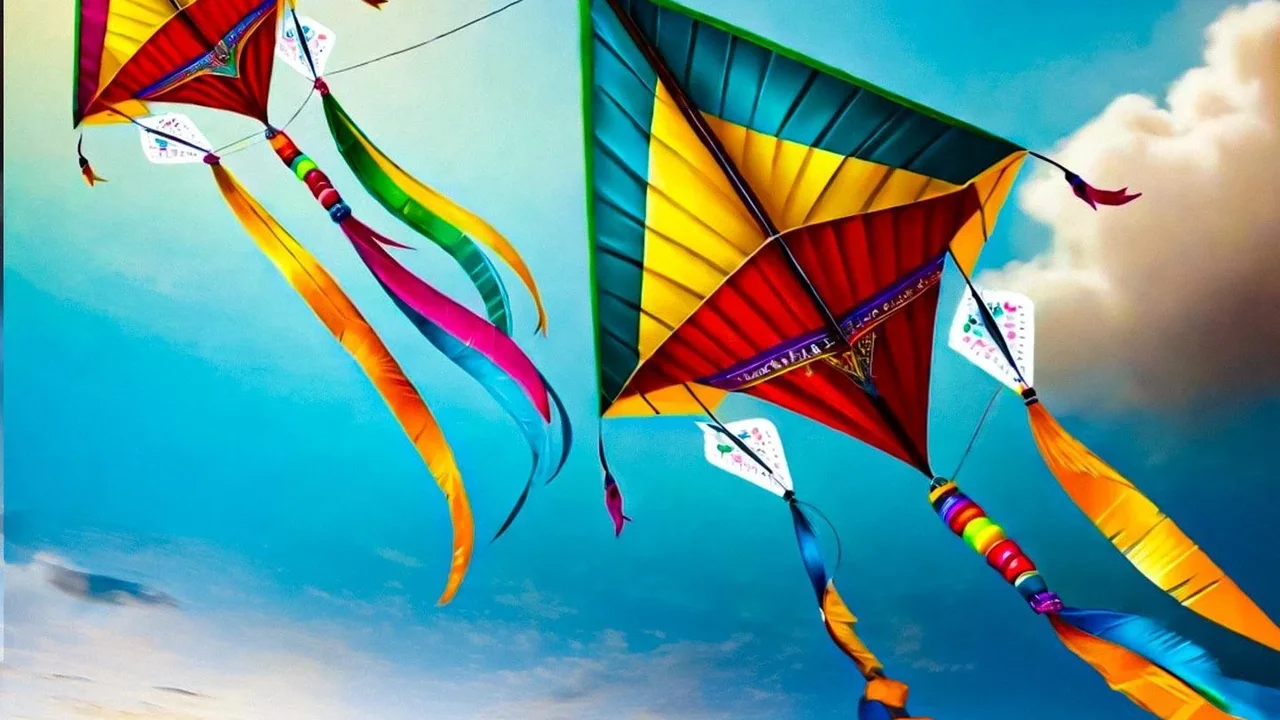
More Than Just a Distraction
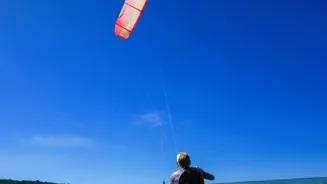
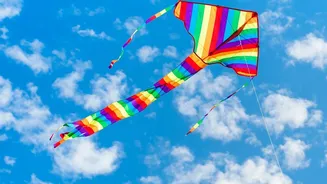
Flying a kite is far more than a simple pastime; it's a multisensory experience that offers a welcome break from digital distractions. The act of watching a colourful kite dance against the vast blue sky can be almost therapeutic, helping to reduce stress
and improve mental clarity. For children and adults alike, focusing on the kite requires being present in the moment, a natural form of mindfulness that allows daily worries to drift away. This shared activity encourages everyone to step away from their devices and engage with the world and each other in a tangible, rewarding way.
A Lesson in Teamwork and Patience
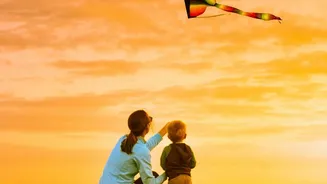
Successfully launching and flying a kite is often a team effort. One person might hold the kite, running to catch the wind, while another manages the string, or 'manjha'. This simple collaboration teaches valuable lessons in communication and teamwork. Furthermore, kite flying requires patience. Waiting for the right gust of wind, learning to control the line with gentle tugs and releases, and problem-solving when the kite dips or dives are skills that build resilience and focus. It's an activity where the process is just as important as the outcome, fostering a sense of shared accomplishment when the kite finally soars.
An Intuitive Science Class
Without opening a textbook, flying a kite provides a hands-on lesson in science. Children intuitively learn about basic principles of aerodynamics, wind dynamics, and gravity. They can feel the pull of the wind, see how adjusting the line affects the kite's flight, and understand the importance of balance and design. This connection with nature deepens the experience; it encourages an awareness of the weather, the direction of the wind, and the open space around them, fostering a greater appreciation for the environment.
Getting Started: A Simple Guide for Families
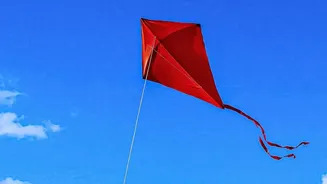
Getting started is easier than you might think. First, find a suitable location, like an open park, a beach, or a field, well away from trees and power lines. A light to moderate breeze is ideal—just enough to make leaves rustle. For beginners, a simple single-line kite, like a classic diamond shape, is a great choice. The launch can be done in two ways. For a solo launch, stand with your back to the wind, hold the kite up, and let the wind catch it as you slowly release the string. For a partner launch, have one person hold the kite about 50 feet away and release it on a signal as the other person pulls the string taut against the wind. The key is a gentle rhythm of pulling the line to climb and releasing it to drift.
Building Physical Skills and Lasting Memories
While it may seem relaxing, kite flying is also a form of gentle physical activity. It encourages running, walking, and develops hand-eye coordination, balance, and motor skills as you control the kite's movement. It is an accessible activity for all ages, from young children to grandparents, making it an inclusive way for the entire family to be active together. Beyond the physical and mental benefits, these outdoor moments become cherished memories. The shared laughter, the collective gasp as the kite catches the wind, and the quiet satisfaction of watching it soar are the simple joys that strengthen family bonds for years to come.