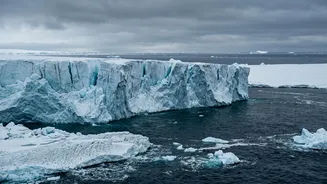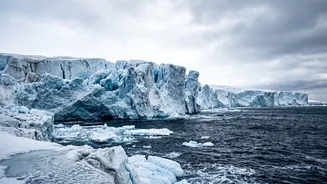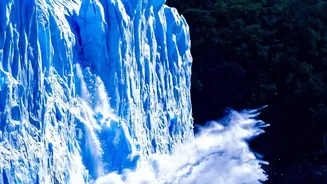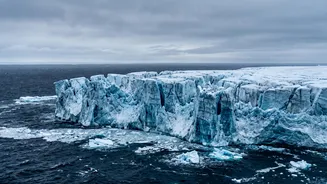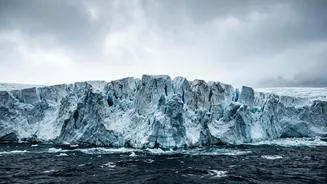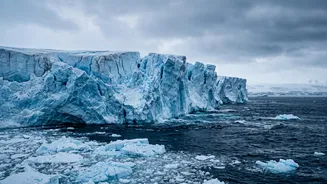



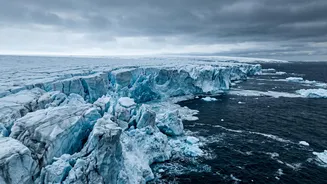
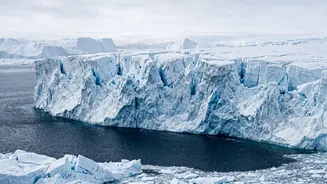
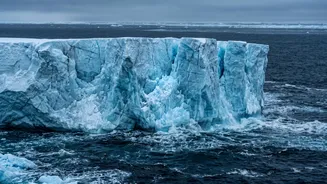
It’s known as the 'Doomsday Glacier' for a reason. New scientific modelling suggests Antarctica’s colossal Thwaites Glacier could melt more aggressively than we thought, posing a greater threat to global coastlines.
The 'Doomsday Glacier' Explained
Thwaites Glacier, located in West Antarctica,
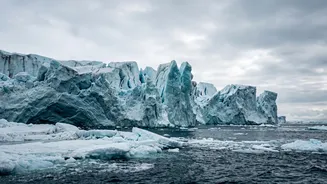
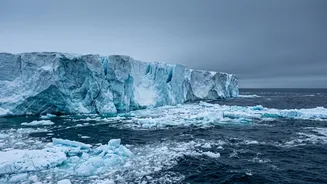
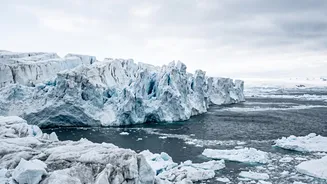
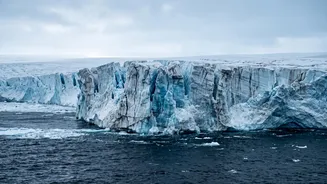
is one of the widest and fastest-melting glaciers on Earth. Roughly the size of Gujarat or the state of Florida, it is a behemoth of ice that has become a focal point for climate scientists. Its ominous nickname comes from the catastrophic consequences its collapse would trigger. The glacier is currently responsible for about 4% of annual global sea-level rise as it sheds billions of tons of ice. But its real danger lies in its role as a natural dam. It acts like a cork, holding back the rest of the vast West Antarctic Ice Sheet. If Thwaites were to fail, it could uncork a much larger volume of ice, leading to a devastating rise in ocean levels.
The Unseen Threat Beneath the Ice
The concern has always been that Thwaites is melting from the bottom up. Because its base rests on a seabed below sea level, warm and salty ocean currents can flow underneath it, eating away at the ice from below. This process of 'vigorous melting' destabilizes the entire ice mass. A recent breakthrough in understanding this process came from researchers at the University of California, Irvine, and NASA's Jet Propulsion Laboratory. Their work focuses on what they call the 'grounding zone'. Previously, models treated the point where ice meets the sea as a simple, fixed line. But new satellite data shows this is actually a zone, sometimes kilometres wide, where seawater intrudes far beneath the grounded ice, causing much more melting than previously accounted for.
What the New Model Reveals
By incorporating this complex 'grounding zone' into a new computer model, scientists found that their simulations could finally replicate the glacier's observed melting over the past few decades with far greater accuracy. When they ran this more realistic model forward, the results were sobering. The model suggests that under certain conditions, Thwaites could contribute up to 30 millimeters (1.2 inches) to global sea level by 2100. This figure is double what previous projections estimated, even without any additional global warming. The 'certain conditions' refer to this newly understood dynamic of warm water penetrating deep under the ice, a process that is already happening and may have been underestimated for years.
Losing Its Grip
A critical part of the glacier's stability comes from underwater ridges that act as anchors, pinning the ice to the seafloor and slowing its slide into the ocean. The new model highlights a significant danger: the accelerated melting in the grounding zone is weakening the glacier's connection to a key formation called the Mouginot Ridge. The simulations show a 60% probability that the glacier will become unpinned from this ridge before the end of the century, an event that could happen as early as the late 2030s. Once that anchor is lost, the glacier's retreat across the downwardstoping seabed could speed up dramatically, triggering a faster than expected collapse.
What This Means for India's Coastlines
While a few dozen millimeters from one glacier may not sound like much, the implications are enormous. The complete collapse of Thwaites alone could raise sea levels by over two feet. If its failure destabilises the entire West Antarctic Ice Sheet, that figure could rise to a catastrophic 10 feet. For a country like India with a 7,500nd kilometer coastline, this is a direct threat. Major coastal cities like Mumbai, Chennai, and Kolkata, as well as the lowly Sundarbans delta, would face existential flooding. This new research doesn't change the threat, but it shortens the timeline, suggesting the risk of significant sea level rise is greater and more immediate than previously thought. The findings are a stark warning that even without future warming, past and present conditions have locked in a dangerous amount of melt.