

The Challenge of Finding Your Way
Navigating on the Moon is far more complex than a terrestrial road trip. There's no atmosphere, no magnetic field to guide a compass, and certainly no network of GPS satellites orbiting overhead. For decades, lunar missions have relied on a slow and painstaking
process, constantly communicating with the massive antennas of the Deep Space Network (DSN) on Earth to calculate their position. This method is effective but inefficient, creating a communications bottleneck as more missions head to the Moon. Every lander, rover, and orbiter has to 'phone home' for directions, which limits autonomy and makes rapid, real-time decisions nearly impossible.
A Beacon in the Dark: Lunar Node-1
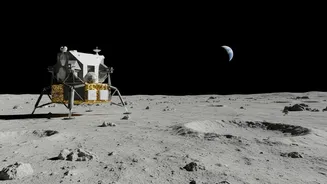
Enter NASA's Lunar Node-1, or LN-1, a pioneering navigation experiment. Flown as a payload on Intuitive Machines' recent IM-1 mission, this small, CubeSat-sized box is a technology demonstrator for a brand-new approach. LN-1 is essentially a radio beacon designed to provide a fixed reference point on the lunar surface. The idea is simple: instead of looking all the way to Earth for a signal, future rovers, landers, and even astronauts could use signals from local beacons like LN-1 to determine their exact location. This successful test, which broadcasted signals from the Moon's surface, was described by NASA as lighting a "temporary beacon on the lunar shore."
How Autonomous Navigation Works
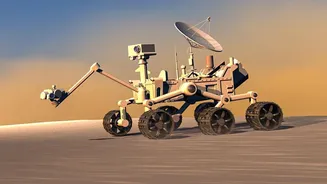
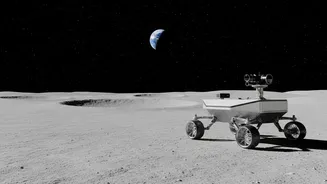
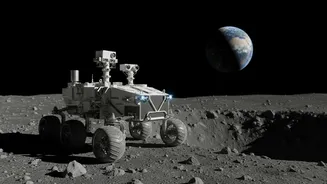
The LN-1 experiment is the first step toward building a local lunar navigation network. By placing multiple beacons across the lunar landscape, NASA and its partners can create a system that functions much like a terrestrial cell tower network for positioning. Each beacon would transmit a signal, and a receiver on a rover or in an astronaut's suit could triangulate its position by listening to multiple beacons at once. The technology behind this, known as the Multi-spacecraft Autonomous Positioning System (MAPS), enables assets to find their position through communication-integrated measurements without constant input from Earth. This creates a self-sufficient system, dramatically increasing safety and operational efficiency.
Unlocking a New Era of Lunar Exploration
Independent navigation is more than a convenience; it's a critical enabler for the future of the Artemis program and a sustainable human presence on the Moon. With an autonomous positioning system, rovers can venture into communications dead zones, such as the far side of the Moon or deep, permanently shadowed craters that may hold water ice. It allows for safer landings, more efficient resource prospecting, and coordinated operations between multiple assets from different agencies and commercial companies. This infrastructure is essential for building a lunar economy, supporting everything from scientific research to the construction of future habitats.
The Road Ahead: Building LunaNet
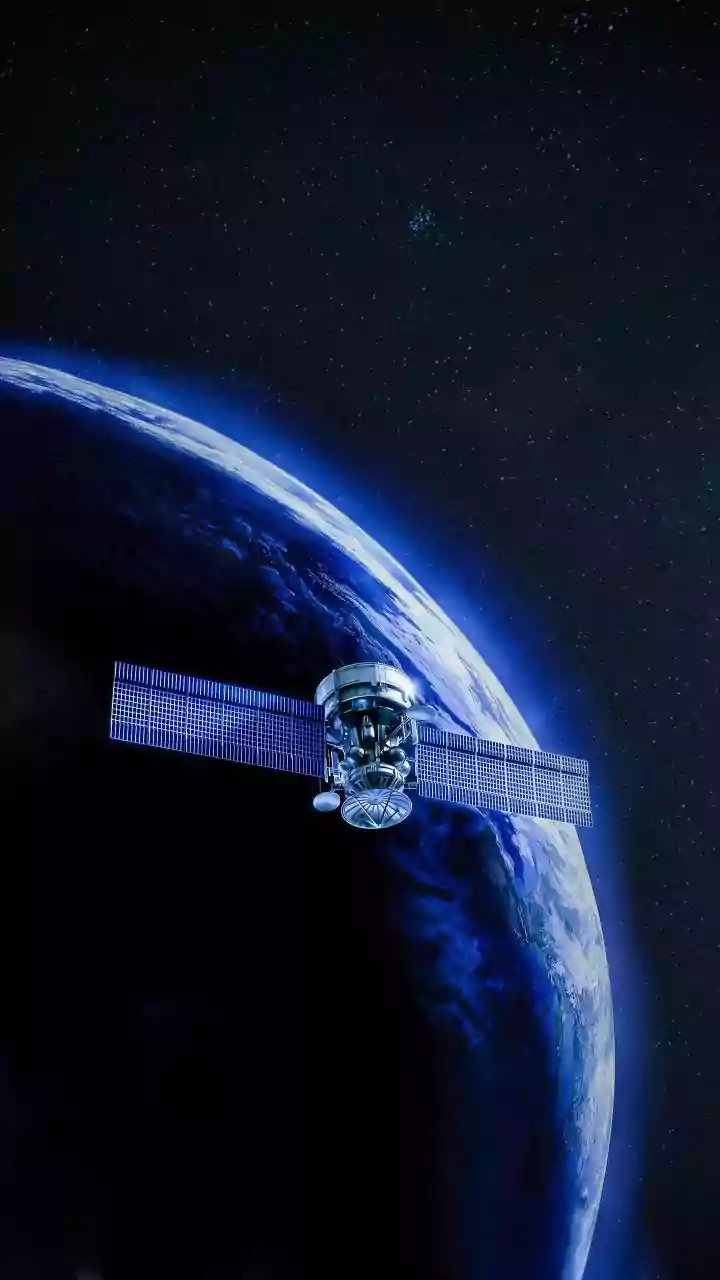
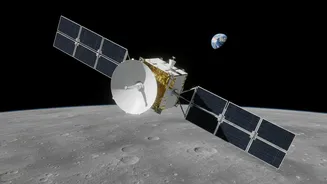
The successful LN-1 test is just the beginning. The ultimate goal is to build out a comprehensive architecture called LunaNet, an interoperable network providing communications and navigation services for all lunar explorers. In parallel, other technologies are also being developed. One recent development is the NavCube3-mini, a compact receiver that will fly on a future lunar relay satellite and is designed to use weak signals from Earth's own GPS and Galileo systems at lunar distances. By combining surface beacons like LN-1 and orbital relays with advanced receivers, NASA is building a robust, multi-layered navigation grid that will finally allow explorers to break their reliance on Earth and operate freely on the lunar frontier.