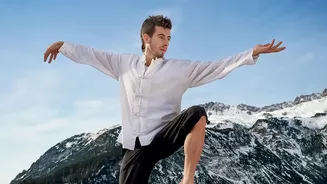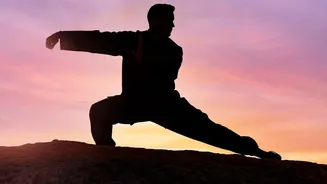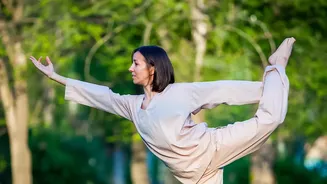




At a glance, gliding on skates and flowing through Tai Chi forms seem worlds apart. One is fast and reactive, the other slow and deliberate. Yet, both demand incredible balance, anchored by the powerhouse of the body: the core.
More Than Just Six-Pack Abs
Before comparing these two
disciplines, it is crucial to understand what the 'core' really is. It is not just the rectus abdominis, or the coveted 'six-pack' muscles. The core is a complex series of muscles that wraps around your entire trunk, stabilising the spine and pelvis. It includes deep muscles like the transverse abdominis, which acts like a natural corset; the obliques on your sides that control rotation; and the muscles of your lower back and glutes. A strong, integrated core is the foundation for almost every movement you make, providing a stable base from which your limbs can move powerfully and efficiently. It is the key to maintaining an upright posture against the force of gravity and external pressures.
Skating: Dynamic Stability in Motion
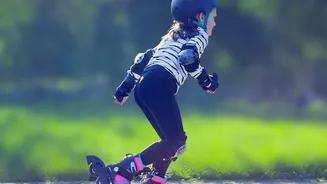
Whether on ice or inline skates, staying upright is a constant battle against instability. Every push, glide, and turn requires your core to work overtime. Skating demands what is known as dynamic stability—the ability to maintain balance while in motion. As you glide, your core muscles fire continuously to counteract shifts in your centre of gravity. The internal and external obliques work hard to control trunk rotation, while the deeper stabilising muscles brace your spine to transfer power from your legs to the ice or pavement. This is a reactive form of strength; your muscles must engage and release in a split second to adjust to changes in speed, direction, and surface imperfections. This constant adjustment builds a core that is exceptionally good at responding to unpredictable forces, enhancing your reflexive balance.
Tai Chi: The Art of Centered Strength
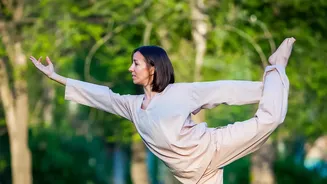
Tai Chi approaches core strength from a completely different angle. Described as 'meditation in motion', this ancient Chinese martial art involves slow, flowing, and deliberate movements. The strength here is not reactive, but centred and sustained. In Tai Chi, every movement is said to originate from the body's centre, known as the 'Dan Tian'. To hold the distinct postures and transition between them with grace, the core must remain constantly engaged in what are often isometric or near-isometric contractions. This means muscles are held under tension without significant movement, building deep endurance in the stabiliser muscles that support posture. This practice enhances body awareness, or proprioception, teaching you to maintain a perfectly aligned and balanced posture from a place of quiet strength.
The Showdown: Reactive Power vs. Grounded Control
So, how do they stack up? Skating builds core strength through dynamic, high-energy movements. It trains your core to be powerful and reactive, essential for sports and activities where you need to change direction quickly and absorb impact. The muscle contractions are fast and powerful, engaging global muscles to a large degree. Tai Chi, on the other hand, builds core strength through slow, sustained holds and transitions. It focuses on strengthening the deep, local stabiliser muscles that are fundamental to good posture and preventing chronic pain. While skating is an external challenge of managing momentum, Tai Chi is an internal challenge of maintaining perfect form and alignment. Research shows both dynamic and isometric training improve core strength, but they develop different qualities: skating fosters reactive power, while Tai Chi builds foundational endurance and control.
Which Is Right For You?
Choosing between skating and Tai Chi depends entirely on your personal fitness goals. If you are looking for a high-intensity cardiovascular workout that sharpens your reflexes and builds powerful, reactive core muscles, skating is an excellent choice. It is a fantastic way to improve dynamic balance and agility. If your goal is to reduce stress, improve your posture, and build deep, foundational core strength and stability with a low-impact activity, Tai Chi is unparalleled. It is often recommended for improving balance and preventing falls, particularly as we age. Both activities offer a superb workout for the muscles that keep you upright, but they travel very different paths to get there.