


What is Automated Mission Control?
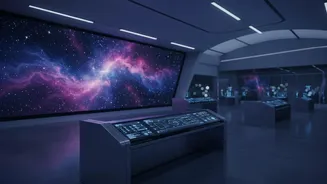
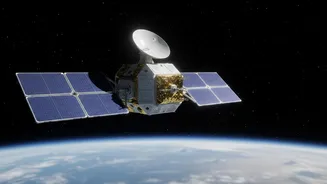
Think of traditional mission control as a room of brilliant experts manually flying a spacecraft with every command sent from Earth. Automated mission control, by contrast, is like upgrading to a highly intelligent autopilot. It uses artificial intelligence
(AI) and machine learning (ML) to handle routine operations, monitor the health of the spacecraft, and even make critical decisions in real-time without constant human intervention. This doesn't mean humans are obsolete; instead, it frees up ISRO's top minds to focus on the bigger picture and unprecedented challenges, while the AI handles the complex, moment-to-moment management of the spacecraft.
Insights from the SMOPS-2026 Conference
The International Conference on Spacecraft Mission Operations (SMOPS-2026), held in Bengaluru, became a crucial forum for this discussion. Organized by ISRO in collaboration with international bodies, the event focused on smart and sustainable mission management. Experts from NASA, ESA, and other global agencies joined Indian scientists to discuss the core challenges automation can solve. Key topics included using AI for autonomous navigation, managing large satellite constellations, enhancing space robotics, and ensuring cybersecurity for these new, complex systems. The consensus was clear: as space becomes more crowded and missions more ambitious, automation is no longer an option, but a necessity.
Why the Shift to Automation is Crucial Now
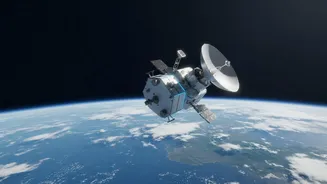
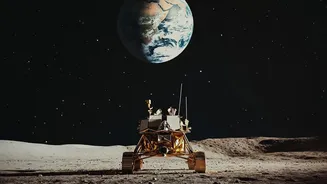
India's space program is growing at an exponential rate. With plans for the Gaganyaan human spaceflight mission, a permanent space station (Bharatiya Antariksh Station), and missions to Venus and Mars, the complexity is immense. For deep-space missions, the communication delay between Earth and the spacecraft can be significant, making real-time manual control impossible during critical events like landings. AI-powered systems can react instantly to unforeseen obstacles, as demonstrated in the Chandrayaan-3 mission's successful landing. Furthermore, with the growing threat of space debris, AI is becoming essential for tracking potential collisions and performing automated avoidance manoeuvres, protecting invaluable national assets.
Powering the Future of Indian Spaceflight
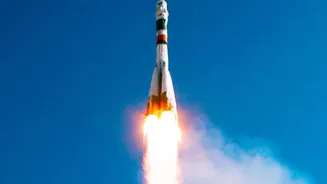
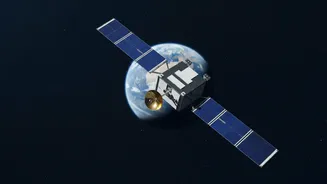
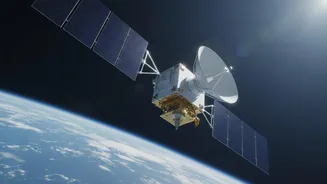
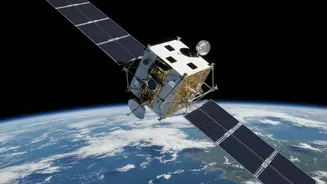
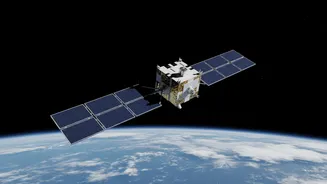
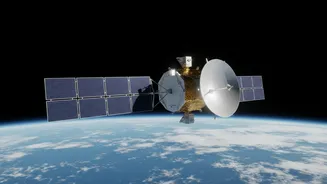
The Gaganyaan mission stands to be the biggest beneficiary of this technological leap. An automated system can monitor life support, manage emergencies with a crew escape system, and ensure the vehicle is on the perfect trajectory, enhancing astronaut safety immeasurably. For ISRO's vision of a future space station, automated systems will be vital for docking procedures, maintenance, and resource management. This shift also enables more efficient management of India’s growing satellite constellations, which are crucial for communication, navigation, and Earth observation. By automating routine satellite health checks and orbital adjustments, ISRO can manage a larger fleet with greater reliability.
The Road Ahead: Challenges and Collaboration
The path to fully autonomous mission control is not without its hurdles. Developing and validating fail-safe AI algorithms that can be trusted with multi-crore missions and human lives is a monumental task. It requires extensive testing, robust cybersecurity to prevent hacking, and significant investment. The SMOPS-2026 conference underscored the importance of collaboration between space agencies, private industry, and academia to overcome these challenges. By bringing together the world's best, India is accelerating its development of indigenous automated systems, ensuring it remains at the forefront of space exploration and technology.