

Jaggery vs. Sugar: What’s the Real Deal?
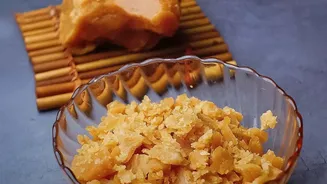
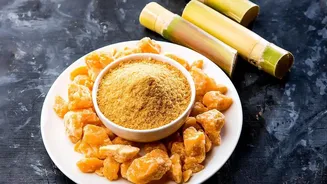
Before we dive into the delicious recipes, it's important to understand the facts. Jaggery is an unrefined sugar made from sugarcane juice or palm sap. Unlike white sugar, which is stripped of all nutrients during processing, jaggery retains molasses.
This means it contains small amounts of minerals like iron, magnesium, and potassium. However, it is primarily composed of sucrose, just like table sugar. Its calorie count is nearly identical to sugar, at around 380-385 kcal per 100g. Critically, most common sugarcane jaggery has a high glycemic index (GI), meaning it can raise blood sugar levels just as quickly, if not faster, than white sugar. So, why choose it? For its complex flavour, its mineral content, and its place in tradition—not as a free pass to eat unlimited sweets.
1. Nolen Gurer Payesh (Bengali Rice Kheer)
This iconic Bengali pudding is a winter delicacy, defined by the unique flavour of 'nolen gur' or date palm jaggery. To make it, slowly simmer full-fat milk in a heavy-bottomed pan until it thickens and reduces. Add fragrant Gobindobhog rice (or another short-grain rice) and cook until the grains are soft and the mixture is creamy. The most crucial step is to turn off the heat and let the payesh cool for a few minutes before stirring in the grated or liquid date palm jaggery. Adding it to boiling milk can cause it to curdle. Once the jaggery dissolves completely, you're left with a rich, caramel-coloured kheer with an unforgettable aroma.
2. Gud ka Halwa (Jaggery Semolina Pudding)
A comforting dessert, especially popular in the winter months, Gud ka Halwa is warmth in a bowl. Start by heating ghee in a pan and roasting sooji (semolina) until it turns golden brown and aromatic. In a separate pot, melt grated jaggery in water to create a syrup, and strain it to remove any impurities. Carefully pour the hot jaggery syrup into the roasted semolina, stirring continuously to prevent lumps from forming. The mixture will bubble and thicken quickly. Continue cooking until the halwa starts to pull away from the sides of the pan and the ghee begins to separate. Finish by mixing in cardamom powder and a generous amount of sliced almonds and pistachios for a delightful crunch.
3. Puran Poli (Sweet Lentil Flatbread)
A festive favourite from Maharashtra, Puran Poli is a soft flatbread stuffed with a sweet lentil filling. The 'puran' is made by cooking chana dal until it's very soft. After draining the dal thoroughly, it's cooked with an equal amount of grated jaggery in a pan. The mixture first becomes liquidy as the jaggery melts, then thickens into a dense paste. Once it’s thick enough for a spoon to stand upright in it, the filling is flavoured with cardamom and nutmeg powder. This sweet, fragrant paste is then stuffed into a soft dough made from whole wheat flour, rolled thin, and roasted on a tawa with plenty of ghee until golden brown spots appear on both sides.
4. Til Gud Ladoo (Sesame Jaggery Balls)
These energy-packed ladoos are a staple during festivals like Makar Sankranti. The process begins with dry-roasting white sesame seeds (til) on a low flame until they become aromatic and slightly golden. In some variations, roasted peanuts are also added for extra crunch. Next, jaggery is melted in a pan with a little ghee until it forms a bubbling syrup. The consistency is key; you should test it by dropping a bit into cold water—if it forms a soft ball, it's ready. Turn off the heat, quickly mix in the roasted sesame seeds and nuts, and let the mixture cool just enough to handle. While it's still warm, grease your palms with ghee and roll the mixture into small, firm balls.
5. Adhirasam (Jaggery Rice Fritters)
A traditional South Indian sweet, Adhirasam is a chewy, deep-fried pastry that requires patience and precision. The process starts with making rice flour from raw rice that has been soaked and partially dried. The most critical part is the jaggery syrup ('paagu'), which must be boiled to a 'soft ball' consistency. To test this, a drop of the syrup in water should hold its shape and be pliable. Hot syrup is then gradually mixed into the rice flour to form a soft, sticky dough, which is left to ferment for a day or two. Small portions of this dough are flattened into discs, often with a hole in the middle, and deep-fried on low heat until dark brown and cooked through.