







The Multi-Billion Dollar Deal
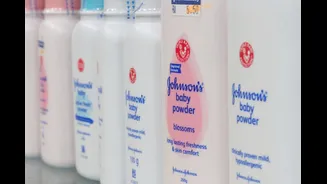
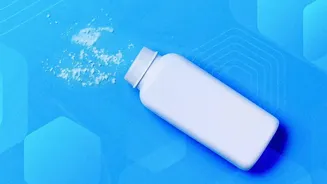
Johnson & Johnson has offered to pay approximately $5.5 billion to resolve the vast majority of outstanding lawsuits from claimants who allege its talc-based powders led to ovarian cancer. This deal, announced in late July 2026, aims to end more than
a decade of litigation involving around 76,000 claims. The settlement is not a lump sum payment but a structured plan, and it is contingent on at least 95% of the plaintiffs agreeing to the terms. For J&J, this represents a path to move past a significant legal and financial overhang that has dogged the company for years, even as it has consistently denied its products are harmful.
A Calculated Business Decision
A corporate settlement, especially one of this magnitude, is fundamentally a risk management strategy. It's a calculated decision to cap liability and end the enormous costs associated with prolonged litigation. In its official statements, J&J has been clear that the settlement is not an admission of wrongdoing. Erik Haas, J&J's worldwide vice president of litigation, stated that while the company was confident it would ultimately prevail, the resolution allows it to "put this matter behind it." Companies often settle for reasons of financial predictability, to avoid the uncertainty of jury trials (which have produced mixed results for J&J), and to stop the ongoing damage to their reputation. It's often cheaper to settle than to continue fighting thousands of individual cases for years to come, regardless of how strong a company believes its scientific case is.
Legal Proof vs. Scientific Proof
This is the crucial distinction. In a courtroom, the standard of proof is typically "a preponderance of the evidence" or, on the balance of probabilities. A jury or judge must be persuaded that a claim is more likely true than not. This is a very different standard from scientific proof, which requires a high degree of certainty, reproducible results, and broad consensus within the scientific community. Science deals in hypotheses, testing, and evolving understanding; law requires a definitive conclusion to resolve a specific dispute. A recent court ruling, in fact, cast doubt on the ability of plaintiffs to prove that talc specifically caused their cancer, strengthening J&J's legal position just before this settlement offer. This highlights that a legal fight can be lost on procedural or evidentiary grounds that have little to do with a final scientific verdict.
The Unsettled Science of Talc
The scientific community itself does not have a universal consensus on asbestos-free talc and ovarian cancer. Major health bodies have reached different conclusions. Some case-control studies suggested a correlation between perineal (genital) talc use and a slightly increased risk of ovarian cancer, but these studies often rely on people's memories of past use, which can be unreliable. Other large, high-quality studies, including a major one published in the Journal of the American Medical Association, found no statistically significant link. The International Agency for Research on Cancer (IARC), part of the WHO, classifies perineal talc use as "possibly carcinogenic to humans," a category that means the evidence is limited. This scientific ambiguity is a key reason the legal battles have been so protracted. J&J has maintained for years that decades of studies show its cosmetic talc is safe.
Moving Forward with Cornstarch
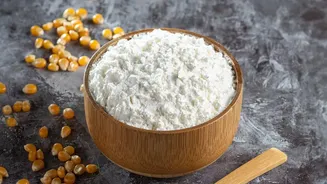
Even as it fought the lawsuits, J&J made a significant business pivot. The company stopped selling talc-based baby powder in the U.S. and Canada in 2020, and then globally in 2023, transitioning to cornstarch-based alternatives. The company described this as a commercial decision driven by declining demand and what it termed "misinformation" about the product's safety. This move effectively ended the consumer-facing part of the controversy, allowing the company to sidestep the debate in the marketplace while continuing to fight it in the courtroom. The settlement, therefore, is the final step in closing this long and costly chapter for the company.