





The Himalayan Marvel: Udhampur-Srinagar-Baramulla Rail Link
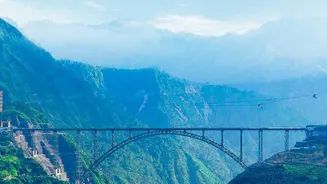
Connecting the Kashmir Valley with the rest of India is a monumental task, and the Udhampur-Srinagar-Baramulla Rail Link (USBRL) is a modern epic of engineering. The route features the Chenab Rail Bridge, the world's highest railway bridge, soaring 359
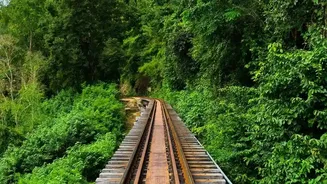
metres above the riverbed—taller than the Eiffel Tower. Its construction in a seismic zone required immense stability and precision. The line also includes the Pir Panjal Railway Tunnel, which at over 11 kilometres, is one of India's longest. This tunnel bores through the volatile Himalayan geology, providing an all-weather link that bypasses roads often closed by snow. The project stands as a powerful symbol of national integration and engineering ambition.
The Coastal Conqueror: Konkan Railway
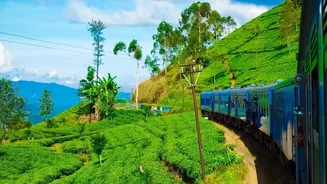
Considered one of India's greatest engineering feats since Independence, the Konkan Railway traverses 741 kilometres of treacherous terrain along the western coast. The project, which was once abandoned by the British as too formidable, required carving a path through the rocky Sahyadri mountains, crossing over 1,500 rivers, and building 92 tunnels. Engineers faced constant challenges from landslides, flash floods, and collapsing soil in a region that receives heavy monsoon rains. The completion of this line in 1998 was a testament to perseverance, connecting Maharashtra, Goa, and Karnataka and dramatically cutting travel time.
The Colonial Classic: Kalka-Shimla Railway
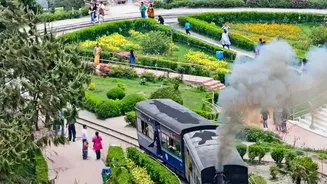
A journey on this UNESCO World Heritage Site is like travelling back in time. Built in 1903 to connect Shimla, the summer capital of British India, this narrow-gauge railway is a marvel of precision. Over its 96-kilometre route, the 'toy train' navigates an astonishing 919 curves, crosses 864 bridges, and passes through 102 tunnels. The line ascends over 1,400 metres with a steep gradient, a significant challenge for early 20th-century engineers. Its multi-arched galleries and tunnels were brilliant solutions for the hilly topography, making it not just a functional railway but a rolling monument to heritage engineering.
The Sea-Straddling Wonder: Pamban Bridge
India's first-ever sea bridge, the Pamban Bridge connects the mainland to Rameswaram Island. Opened in 1914, this 2-kilometre-long structure has withstood a highly corrosive environment and fierce cyclones for over a century. Its most ingenious feature is a central double-leaf bascule section that opens up to allow ships to pass through. In 1964, a devastating cyclone washed away much of the bridge, but it was remarkably restored in just 46 days. A new vertical-lift bridge has now been constructed parallel to the original, continuing the legacy of connecting this sacred island against all odds.
The Waterfall Route: Braganza Ghat Section
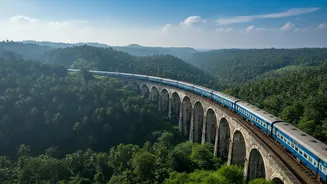
The railway line passing by Dudhsagar Falls, located on the Goa-Karnataka border, offers one of the most cinematic train journeys in India. Carved into the steep slopes of the Western Ghats, the Braganza Ghat section was a difficult line to build, connecting Portuguese Goa with British India in the late 19th century. The defining feature is the bridge that curves right in front of the spectacular four-tiered waterfall, known as the 'Sea of Milk'. Especially during the monsoon, when the falls are at their most powerful, a train passing through the mist and spray is a breathtaking sight that showcases a harmonious blend of nature and engineering.