


What is the PRIMA Mission?
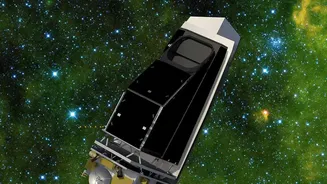
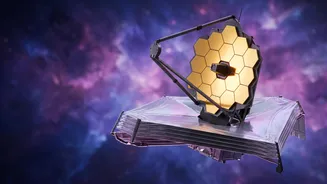
PRIMA stands for the PRobe far-Infrared Mission for Astrophysics. It represents the first of a new class of NASA missions called Probe Explorers, designed to be ambitious yet cost-effective. PRIMA will be a space telescope with a 1.8-metre (5.9-foot)
mirror, cryogenically cooled to near absolute zero. This extreme cold is essential because the telescope is designed to see the universe in far-infrared light. This type of light is essentially heat radiation, and by cooling the telescope, scientists can prevent its own warmth from interfering with the faint heat signals coming from the dawn of time. Its goal is to bridge the observational gap between existing observatories like the James Webb Space Telescope (JWST) and ground-based radio telescopes, giving us a more complete picture of cosmic history.
A New Window on the Universe
So, what will PRIMA actually look at? The mission has several key scientific goals. One of its primary tasks is to study the formation of stars and planetary systems, including how water is delivered to planets like Earth. By peering through the dense clouds of cosmic dust that obscure visible light, PRIMA will be able to witness the earliest stages of stellar and planetary birth. It will also investigate the co-evolution of galaxies and their central supermassive black holes over billions of years. Furthermore, the mission will trace how heavy elements and interstellar dust have been created and distributed since the universe's infancy. In essence, PRIMA is a cosmic archaeology mission, designed to uncover how the universe became what it is today.
What 'Phase B' Development Means
The news that PRIMA has advanced to Phase B is a significant step. In NASA's project lifecycle, this phase marks the transition from a conceptual idea to a concrete project. During Phase B, the mission team will finalize the preliminary design and complete the necessary technology development. It's the stage where engineers ensure the proposed design can meet all the scientific requirements within the planned budget and timeline. This involves finalizing agreements with international partners, defining system requirements, and beginning the procurement process for key components. Successfully completing Phase B means the project is mature enough to move to Phase C, which involves the final design and fabrication of the spacecraft and its instruments. For a mission with a capped cost of $1.2 billion, this phase is crucial for ensuring everything is on track for its 2033 launch target.
The Technology Behind the Vision
To achieve its ambitious goals, PRIMA will be equipped with a suite of cutting-edge instruments. These include an imaging polarimeter called PRIMAger and a high-resolution spectrometer known as FIRESS. These instruments are built on decades of research and will use a new type of extremely sensitive detector. The detectors are so sensitive they are limited only by the natural background light of the cosmos itself. PRIMAger will allow for rapid hyperspectral imaging, while FIRESS will analyze the composition of cosmic objects in great detail. This powerful combination will give astronomers the tools they need to study everything from the atmospheres of distant exoplanets to the composition of objects in our own solar system's Kuiper Belt.
Looking Ahead to 2033
While a 2033 launch may seem distant, the journey for a mission of this scale is long and complex. The selection of PRIMA for development came after a detailed evaluation of mission concepts recommended by the scientific community's 2020 Decadal Survey. It represents a major investment in the future of astrophysics. The mission involves a global collaboration, with contributions from the space agencies of Canada, France, Germany, and the UK, among others. Once launched, PRIMA is planned for a five-year mission, during which it will conduct deep surveys of the sky. The data it collects will be processed and archived for use by astronomers all over the world, promising to answer some of the deepest mysteries about our cosmic origins.