








A Song is Born
The story begins not as an anthem, but as a five-stanza poem written in a highly Sanskritised form of Bengali called Sadhubhasha. Penned by the polymath and Nobel laureate Rabindranath Tagore, the composition, titled 'Bharoto Bhagyo Bidhata', was first
written on December 11, 1911. It was conceived as a Brahmo hymn, a devotional song celebrating the divine dispenser of India's destiny. At the time, its purpose was spiritual and cultural, a poetic ode to the spirit of India. Few could have predicted its eventual destiny as the official voice of a sovereign republic.
The First Public Chorus
The song made its public debut on December 27, 1911, at the Calcutta session of the Indian National Congress. It was sung on the second day of the session, marking its entry into the nationalist consciousness. However, its premiere was mired in a minor controversy. Some Anglo-Indian newspapers, accustomed to praise for the monarchy, mistakenly reported that Tagore's song was a tribute to the visiting King George V. Tagore himself strongly refuted this claim in later letters, stating he would have considered it a great insult to be capable of such "unbounded stupidity." He clarified that the 'Bhagya Bidhata' (dispenser of destiny) in his song was the eternal guide of India, not any earthly king.
A Melody That Travelled
Long before it became the official anthem, Jana Gana Mana took on a life of its own across India. A significant moment came in 1919, when Tagore visited the Besant Theosophical College in Madanapalle, Andhra Pradesh. There, he sang the song, and it was so well-received that it was adopted as the college's prayer. It was here that Tagore also created an English translation, titling it 'The Morning Song of India'. The song's influence grew further when Netaji Subhas Chandra Bose adopted a slightly different, Hindustani version called 'Shubh Sukh Chain' as the anthem for the Indian National Army (INA) in 1943. This version, set to music by Captain Ram Singh Thakuri, solidified the song's patriotic credentials and its association with the armed struggle for freedom.
The Great Anthem Debate
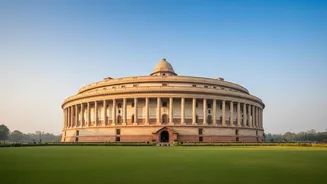
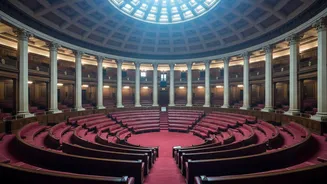
As India neared independence, the question of a national anthem became a topic of serious discussion within the Constituent Assembly. There were two main contenders: Tagore's Jana Gana Mana and Bankim Chandra Chatterjee's 'Vande Mataram'. Vande Mataram had a much longer association with the freedom struggle, serving as a rallying cry for decades. However, some members raised concerns about its religious imagery in the later stanzas and the difficulty of setting it to band music. In contrast, Jana Gana Mana was seen by many, including Jawaharlal Nehru, as more suitable for orchestral and band performances, and its lyrics were considered universally encompassing of India's pluralism. The song had also already been presented as India's anthem at a United Nations meeting in New York in 1947, giving it a degree of international recognition.
A Decision for a New Republic
The matter was finally settled on January 24, 1950, just two days before India became a republic. The President of the Constituent Assembly, Dr. Rajendra Prasad, made a formal statement announcing the decision. He declared that Jana Gana Mana would be the National Anthem of India. In a gesture of respect for the deep emotional and historical significance of the other contender, he added, "the song Vande Mataram, which has played a historic part in the struggle for Indian freedom, shall be honoured equally with Jana Gana Mana and shall have equal status with it." This compromise honoured the legacy of the entire freedom movement while choosing a forward-looking anthem for the new nation.