






The Poles as a Planetary Radiator
Think of the Earth's climate system as a giant engine. The tropics absorb immense heat from the sun, and the poles act like radiators, releasing that heat back into space. This balance is fundamental to keeping global temperatures stable. For years, scientists
understood this basic principle, but the precise details of how much heat escapes, especially from the Arctic and Antarctic, remained a significant gap in our knowledge. This is because a large portion of this energy is released as far-infrared radiation, a type of light our eyes can't see and which has not been systematically measured until recently.
The Ocean's Role as a Giant Battery
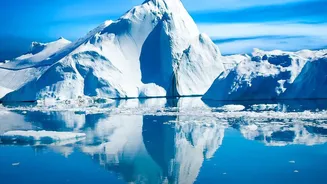
The key player in this process is the ocean. Water has a high capacity to store heat. During the long days of polar summer, open water absorbs solar energy. As sea ice melts, it exposes darker ocean surfaces, which absorb even more heat instead of reflecting it like bright white ice does—a phenomenon known as the ice-albedo feedback. This stored heat doesn't just disappear. In the dark, cold winter, the ocean releases this accumulated energy back into the atmosphere. This seasonal release of heat is what warms the polar air in winter far more than the summer air, a key feature of a phenomenon called Arctic Amplification, where the Arctic warms much faster than the rest of the planet.
NASA's PREFIRE Mission
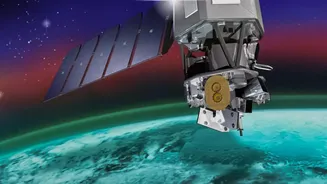
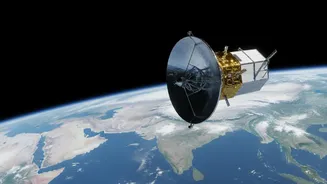
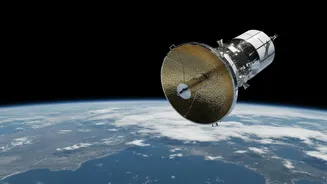
To fill this critical knowledge gap, NASA launched a new mission in mid-2024 called PREFIRE (Polar Radiant Energy in the Far-InfraRed Experiment). This mission uses a pair of small satellites, known as CubeSats, to measure these previously unobserved far-infrared emissions from the Arctic and Antarctica. By getting a detailed picture of where and when this heat is being released, scientists can vastly improve their models of Earth's climate. According to NASA, this will lead to better predictions of sea ice loss, ice sheet melt, and subsequent sea level rise. The mission began sending back its first data in July 2024, providing an unprecedented look at the poles' energy budget.
Why Polar Heat Matters for India
What happens in the Arctic doesn't stay in the Arctic. The rapid warming at the poles has global consequences. Changes in the temperature difference between the poles and the equator can affect large-scale atmospheric circulation patterns like the jet stream. This can lead to more extreme and unpredictable weather events in the mid-latitudes, including shifts in rainfall patterns and the intensity of heatwaves. For India, which relies heavily on the stability of the monsoon, any significant alteration in global weather patterns is a cause for concern. Furthermore, the melting of polar ice is a primary driver of global sea level rise, which directly threatens coastal communities and ecosystems worldwide.