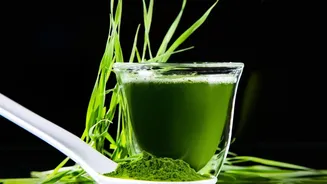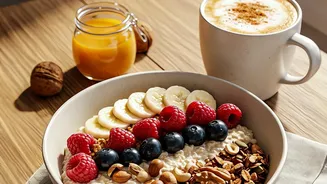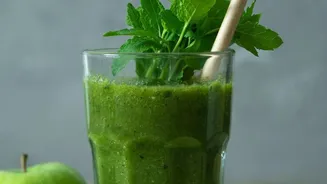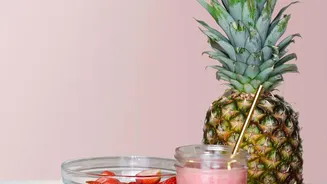





The Allure of the Liquid Lunch
In a fast-paced world, liquid meals seem like the perfect solution. They're quick to prepare, easy to consume on the go, and can be packed with nutrients like protein, vitamins, and minerals. Many people turn to them for weight management, athletic recovery,
or simply as a convenient way to get nourishment during a busy day. While they offer clear benefits in terms of efficiency, their ability to truly satisfy hunger is where things get complicated. The physical form of our food—whether it's solid or liquid—plays a surprisingly crucial role in how full we feel after eating.
The Science of Feeling Full
Satiety isn't just about a full stomach; it's a complex process involving your senses, stomach, and hormones. It starts with the sensory experience of food—the sight, smell, and taste. Then, as you eat, the physical act of chewing begins to send signals to your brain that food is on the way. Once in the stomach, solid food takes up space and digests slowly, leading to a sustained feeling of fullness. This process also triggers the release of key gut hormones. Glucagon-like peptide-1 (GLP-1) and cholecystokinin (CCK) are hormones that signal fullness to the brain, while ghrelin, often called the 'hunger hormone', is suppressed after a meal, reducing your appetite.
Why Liquids Don't Always Measure Up
Liquid meals often bypass several of these critical satiety steps. Since they require no chewing, the initial fullness signals from oral processing are missed. Liquids also tend to empty from the stomach much more quickly than solid foods. This rapid transit means the body might not fully register the calories consumed. Research suggests that the body's hormonal response can be blunted. Because liquids pass through so quickly, the release of fullness hormones like GLP-1 may be less pronounced, and the suppression of the hunger hormone ghrelin can be weaker compared to when you eat a solid meal of equivalent calories. As a result, you might not feel as satisfied and may compensate by eating more later in the day.
The Surprising Power of Chewing
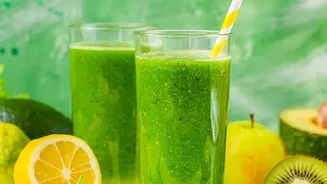
The simple act of chewing is a powerful tool for appetite regulation that we often overlook. Studies have consistently shown that chewing food more thoroughly can decrease self-reported hunger and reduce overall food intake. The mechanical process of mastication does more than just break down food; it triggers a hormonal cascade that signals satiety. When participants in studies chewed their food more, they showed increased levels of the fullness hormones CCK and GLP-1 and lower levels of the hunger hormone ghrelin. Because liquid meals are swallowed without any chewing, this entire hormonal signaling process is skipped, which helps explain why a 400-calorie smoothie might feel less satisfying than a 400-calorie chicken salad.
It’s Not Just Physical, It's Psychological
The expectation of how filling a food will be also plays a role. Studies show that people generally expect semi-solid or solid foods to be more satiating than liquids, and this expectation can influence intake. The ritual of sitting down to eat a plate of food, using a knife and fork, and taking time to chew creates a psychological experience of a 'proper meal' that a quickly consumed drink can't replicate. The brain uses these sensory and behavioural cues to register satisfaction. When these cues are absent, the brain might not get the message that you've consumed a complete meal, leaving you feeling psychologically, as well as physically, unsatisfied.
How to Make Liquid Meals More Filling
If you enjoy the convenience of liquid meals, you don't have to give them up. You can make them more satisfying by incorporating ingredients that slow digestion and promote satiety. Adding sources of fiber (like chia seeds, flax seeds, or blended vegetables), protein (from protein powder, yogurt, or nut butters), and healthy fats (like avocado or nut butters) can significantly increase a liquid meal's staying power. These nutrients slow the rate at which the liquid empties from your stomach. Additionally, try sipping your smoothie slowly rather than drinking it quickly. Taking more time allows your brain and gut a better chance to register the incoming calories and initiate the hormonal responses that lead to feeling full.