





A Purple Haze Descends
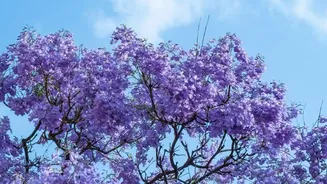
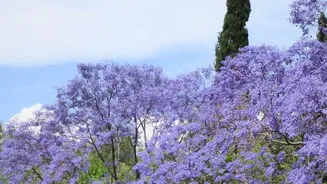
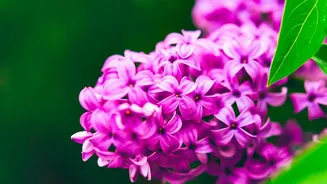
For roughly six weeks between October and November, Sydney trades its usual colour palette for brilliant shades of purple. This annual spectacle is the work of the jacaranda tree, a species that, despite its iconic status in the city, is not native to Australia.
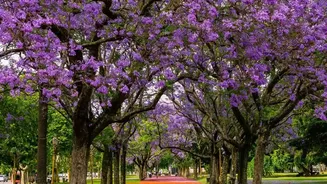
Originally from South America, particularly Brazil and Argentina, the jacaranda has been so thoroughly embraced that its bloom is now considered a quintessential Sydney spring experience. The season typically peaks in mid-November, when the vibrant, bell-shaped flowers are at their most dense, creating an immersive, colourful haze in parks and suburbs across the city. It’s a fleeting phenomenon, a reminder that summer is just around the corner, prompting locals and tourists alike to get out and witness the floral show before the petals all fall.
Kirribilli’s Famous Purple Tunnel
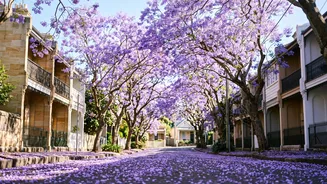
If there is one epicentre of jacaranda madness, it's McDougall Street in the harbourside suburb of Kirribilli. For most of the year, it's a quiet residential road, but for a few weeks in spring, it becomes one of Sydney's most photographed spots. The mature jacaranda trees that line both sides of the street form a dense, arching canopy, creating a stunning purple 'tunnel' that draws enormous crowds. It's become so popular that local authorities often implement weekend road closures to allow people to safely enjoy the view and take photos. For the best experience, it's recommended to visit early on a weekday to avoid the biggest crowds. From there, it's a short walk to other vantage points in Kirribilli and neighbouring Lavender Bay, where you can see the purple blooms framing iconic views of the Sydney Harbour Bridge and Opera House.
More Top Spots for Jacaranda Spotting
While Kirribilli might be the most famous, it's far from the only place to enjoy the purple rain. The Royal Botanic Garden is home to some of Australia's oldest jacaranda specimens, dating back to the 1850s. The historic cobblestone streets of The Rocks also offer a beautiful contrast between the old buildings and the soft purple flowers. In the Eastern Suburbs, areas like Paddington, Woollahra, and Double Bay have streets lined with stunning displays. A walk down Oxford Street in Paddington reveals a beautiful row of trees in front of the historic Victoria Barracks. For those in the Inner West, the University of Sydney has long been famous for its quadrangle jacaranda, and the surrounding suburbs of Glebe, Camperdown, and Newtown are also worth exploring. Further afield, Parramatta Park and the jacaranda-lined streets of Camden also offer incredible displays.
A Contentious but Celebrated History
Jacarandas were first introduced to Australia in the mid-19th century. Botanist Allan Cunningham is credited with first bringing a specimen to the attention of English botanists after a trip to Rio de Janeiro in 1818, though it took decades for them to be successfully propagated in Sydney. The first recorded flowering was in the Royal Botanic Gardens in the 1850s or 1860s. The trees became popular in civic beautification programs throughout the 20th century. One popular but unproven myth suggests a hospital matron in North Sydney gave jacaranda seedlings to new mothers. Another story notes that the famous trees on Kirribilli's McDougall Street were a gift from the town of Grafton, NSW—known as Australia's 'Jacaranda Capital'—which hosts its own annual jacaranda festival. Though not native, the jacaranda has been woven into the city's fabric, becoming a beloved, living symbol of Sydney's springtime.