






What is 'Unauthorised Employment'?
On an F-1 student visa, your primary purpose in the US is education. US immigration law is therefore extremely strict about employment. 'Unauthorised employment' isn't just about getting caught working a cash-in-hand job at a local restaurant. It’s a broad
category that includes many activities students might not realise are forbidden. This includes taking on freelance projects, working remotely for a company back in India while you're physically in the US, or even accepting 'payment' in the form of free room and board in exchange for services like babysitting. Essentially, if you are providing a service and receiving any form of compensation without specific, prior authorisation from US immigration authorities, you are likely engaging in unauthorised employment. This is considered a serious violation of your visa status.
The Legal Pathways to Work
Thankfully, there are several approved ways for F-1 students to gain work experience and earn money legally. The key is to follow the rules precisely. The main avenues are: On-Campus Employment, which allows you to work up to 20 hours per week during the semester and full-time during breaks, usually at places like the library, cafeteria, or an academic department. Curricular Practical Training (CPT) is for work experience, like an internship, that is an integral part of your academic curriculum. It must be in your field of study and is authorised by your university's Designated School Official (DSO). Optional Practical Training (OPT) is a 12-month work authorisation that most students use after graduation to gain experience in their field. Students in designated STEM fields can even apply for a 24-month extension. For OPT, you need authorisation from both your DSO and US Citizenship and Immigration Services (USCIS), and you cannot start working until you have your Employment Authorization Document (EAD) in hand.
Common Traps and Misconceptions
Many students fall into trouble due to simple misunderstandings. A common myth is that unpaid internships are always permissible. However, if the work is for a for-profit company and would normally be a paid position, it can still be considered unauthorised employment. Another trap is the '12-month CPT rule': if you work for 12 months or more on full-time CPT, you completely lose your eligibility for post-graduation OPT. It is crucial to use part-time CPT during your studies to preserve your valuable OPT period. Also, never assume anything. A job offer letter is not a work permit. Starting work even a day before the official start date on your EAD card is a violation.
The High Cost of Breaking the Rules
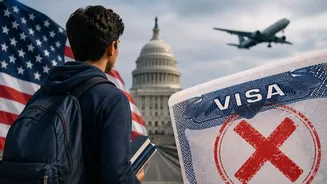
The word 'jeopardise' in the headline is not an exaggeration. The consequences of unauthorised work are severe and often irreversible. If you are found to have worked without permission, your F-1 visa status is automatically terminated. This means you are no longer legally in the country and must leave immediately. You will lose any eligibility for future work authorisations like OPT. Furthermore, this violation creates a permanent negative mark on your immigration record, making it extremely difficult, if not impossible, to obtain any type of US visa in the future, whether for tourism, work, or permanent residency. Reinstatement of your student status is typically not an option after an unauthorised employment violation.
How to Protect Your Future
Navigating these complex rules can be daunting, but protecting yourself is straightforward if you are diligent. Your most important resource is the Designated School Official (DSO) at your university's international student office. Before you even consider accepting any job, internship, or volunteer position, paid or unpaid, you must speak with your DSO. They are trained to provide guidance on these exact issues. Get every authorisation in writing. Be wary of 'consultants' or friends who offer advice that sounds too good to be true or suggests 'under the table' workarounds. Following the official process is your only safeguard. Remember, your visa was granted based on you proving you had the financial resources to study in the US; work is considered a privilege, not a right.